
Overnight Sales Automation Tools: How to Choose the Right Stack for Faster Replies
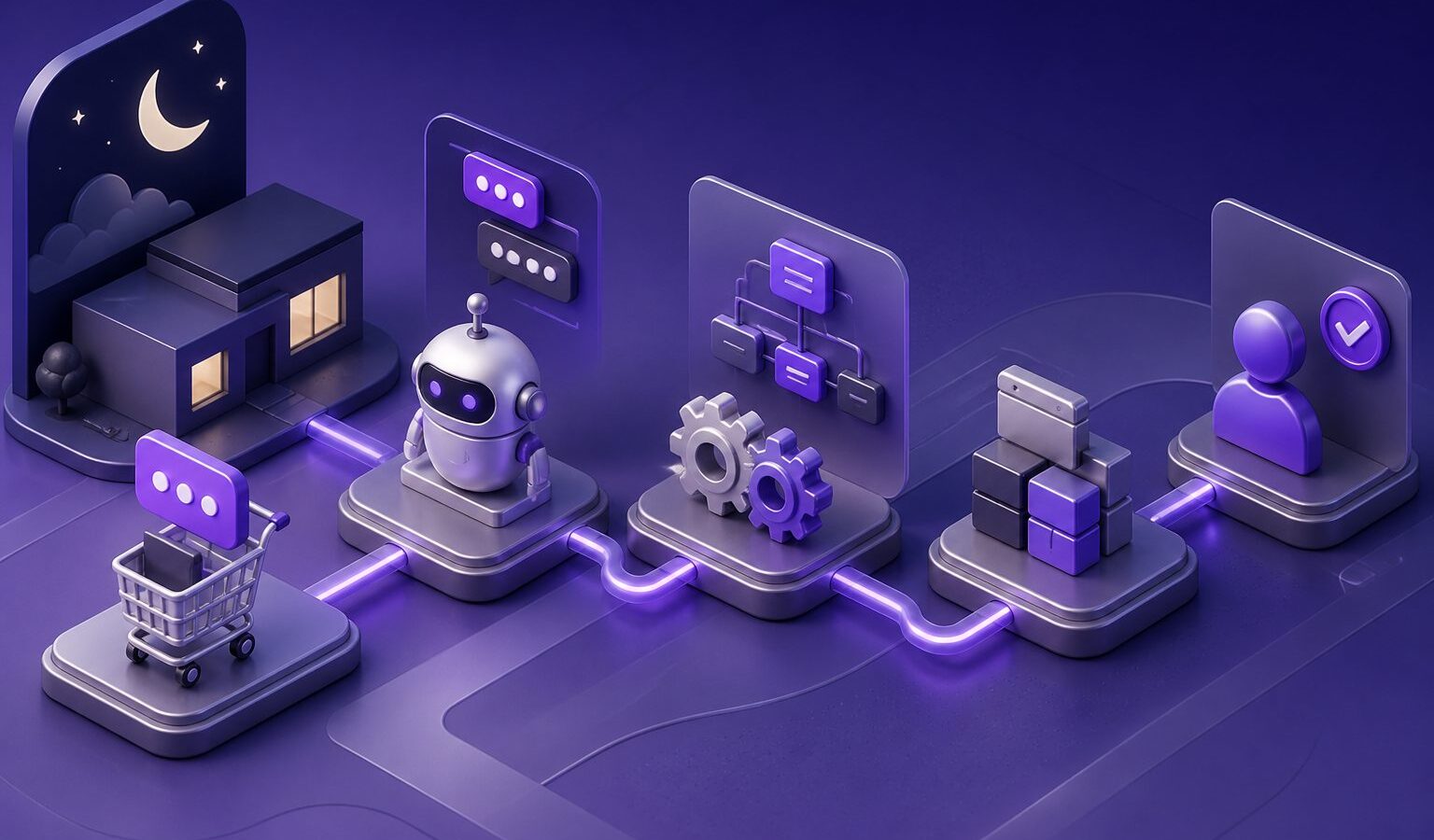
Overnight sales automation tools work best as a coverage layer, not a replacement for your sales team. Catch the lead, answer the obvious questions, route the right prospects, hand off context when a human needs to step in.
The question for SaaS buyers is not whether to automate after hours. It is how much autonomy the system should have before speed starts costing you trust, data quality, or pipeline control. Keep the evaluation grounded in workflow rather than hype. For a broader buyer lens, see toppp.ai’s homepage and the deeper guide on how to evaluate, pilot, and scale sales agents AI for SaaS buyers.
What they are
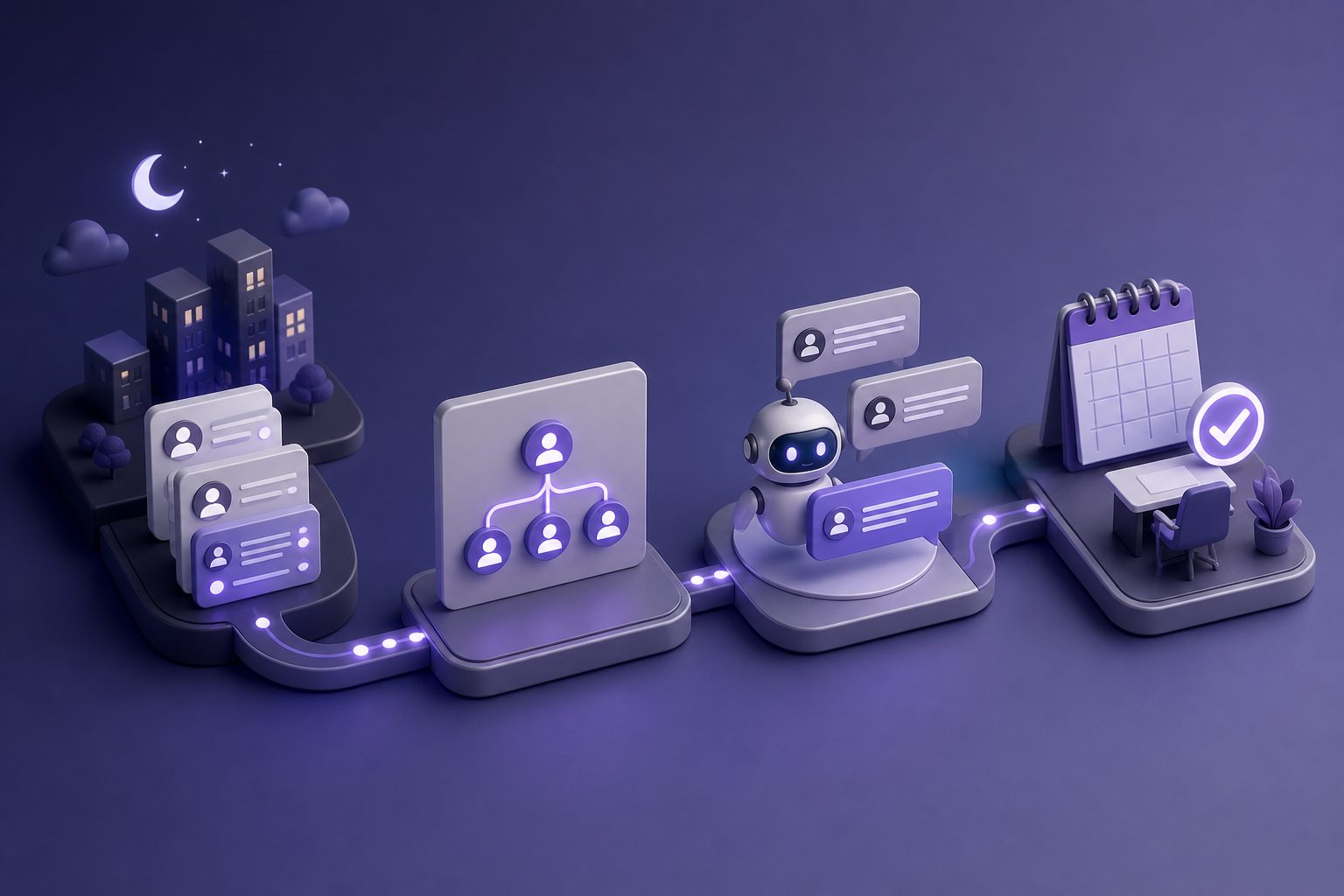
Systems that handle the first moments of a sales interaction while your team is offline: capture inbound interest, send an instant response, qualify basic fit, route the lead, log the interaction in CRM.
The good ones do not try to close deals on their own. They keep the buyer moving and make the next human touch more relevant. Coverage, not theatrical autonomy.
The 5R model
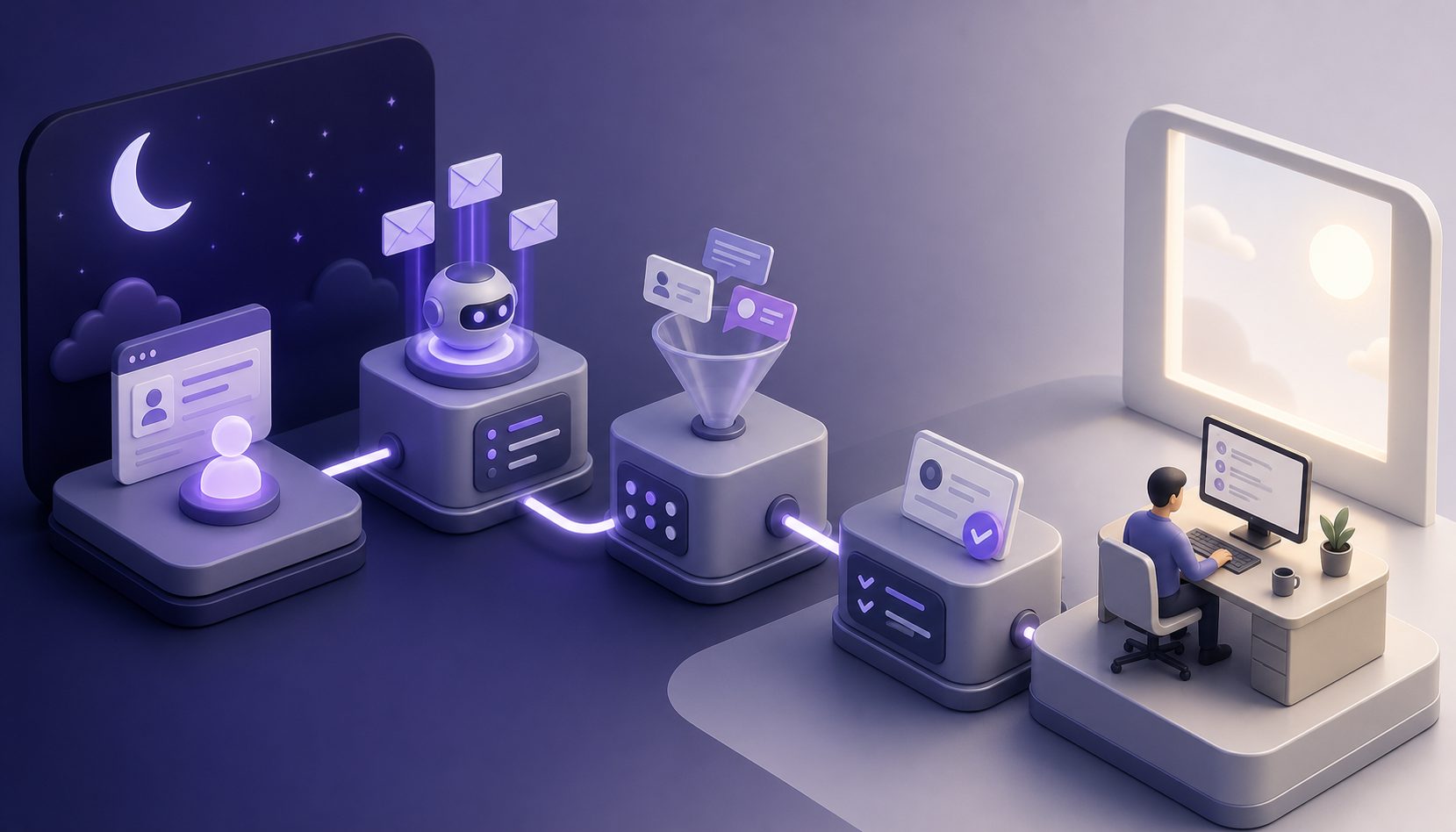
Receive, Respond, Route, Resolve, Relay. Five steps, and a tool that only does one or two of them is not an overnight system.
- Receive: capture form fills, chat messages, missed calls, inbound email.
- Respond: acknowledge the lead instantly and set clear expectations.
- Route: score intent and assign the right owner by segment, territory, or product line.
- Resolve: answer common questions, book meetings, send the right resource.
- Relay: hand the full context to a human once the conversation turns nuanced.
That sequence is what separates a real system from an autoresponder. It also makes evaluation straightforward, since every vendor gets tested against the same five steps.
What to automate, what to keep human
Not every after-hours task belongs to software. Automate repetition, not judgment — speed, triage, and logistics go to the system; pricing, exception handling, and deal strategy stay with people.
| Task | Automate overnight? | Why |
|---|---|---|
| Lead capture and acknowledgment | Yes | Fast response prevents silent drop-off. |
| Basic qualification questions | Yes | Good for fit signals like company size, use case, or timing. |
| Routing by segment or territory | Yes | Reduces manual triage and misassignment. |
| Meeting booking | Yes | Removes friction when intent is clear. |
| Product FAQs and simple objections | Sometimes | Useful if the answers are tightly controlled. |
| Pricing exceptions | No | Human judgment is safer here. |
| Enterprise deal negotiation | No | Context and risk are too high for full automation. |
A workable rule: if the task can be answered with a controlled decision tree, automate it. If it requires trade-offs, policy exceptions, or negotiation, keep a human in the loop.
How to evaluate vendors
Buyers compare too many features and too few failure modes. Score the tool on six checks instead: speed, accuracy, control, integration depth, fallback behavior, visibility.
A vendor should be able to explain in plain language what happens when:
- A lead comes in at 2 a.m.
- The lead is high intent but missing key details.
- The system is unsure whether the account is a fit.
- The lead should go to a specific rep immediately.
- The prospect asks something the automation should not answer.
“It just handles it” is not an answer. You need to know how it handles it, what gets logged, and who can override. A good tool acts quickly and stays explainable.
A 30-day pilot plan
Start with one narrow segment — a single inbound source or one lead type — and define success before you begin.
- Pick one use case. Inbound demo requests, missed calls, or a high-volume chat flow.
- Set hard guardrails. Exclude enterprise accounts, VIP prospects, and anything needing legal or pricing review.
- Write the response rules. Define what the tool can say, ask, and book.
- Instrument the handoff. Every action written back to CRM.
- Review transcripts daily. Look for wrong routing, awkward phrasing, unanswered questions.
- Measure pipeline impact. Meetings booked, qualified handoffs, rep satisfaction — not just response speed.
For a deeper framework at this stage, the guide on sales agents AI for SaaS buyers is the right companion, particularly once the overnight stack moves from experiment to operational use.
Mistakes that make automation feel risky
The biggest is trying to make automation sound human. Buyers notice when a system is overreaching, especially in high-intent conversations, and that destroys trust faster than a slow reply ever would.
Others:
- No human fallback when the conversation gets complex
- Too many permissions for a tool that has not earned trust yet
- Weak logging, which makes debugging impossible
- Generic replies that ignore segment or use case
- Over-automation of pricing, contract terms, or security
The safest stack is usually a workflow engine plus a controlled AI layer — speed without handing over the entire conversation.
What good looks like
A healthy system feels almost invisible. The prospect gets an immediate acknowledgment, the right questions, and a clear next step. The rep opens the CRM at 9 a.m. and finds a complete trail of what happened overnight.
That is the bar. The tool should not create work for the team arriving in the morning — it should cut triage, improve context, and make each handoff cleaner than the last.
Frequently asked questions
What are overnight sales automation tools?
Systems handling after-hours lead capture, first response, qualification, routing, and handoff. In SaaS they keep inbound opportunities warm until a rep can take over.
Do they replace SDRs?
No. Think of them as coverage and triage infrastructure. They cut repetitive work and improve response time; judgment, discovery, and deal strategy stay human.
What should a SaaS buyer pilot first?
One inbound flow with clear rules and measurable outcomes. Demo requests, chat leads, and missed-call follow-up are common first pilots because they are easy to constrain.
How do you avoid bad routing?
Explicit routing logic, clear exclusions, CRM logging. A tool that cannot show why it sent a lead to a specific rep is not ready for production.
Are AI agents and overnight automation the same thing?
Not quite. AI agents can be one part of the stack. Overnight automation is broader — routing, logging, fallback rules, human handoff, not just conversational intelligence.
Final takeaway
The best of these tools do one thing very well: protect response time without giving up control. For SaaS teams that means automating the first mile and keeping humans on the judgment-heavy parts.
Use the 5R model, score vendors on control and fallback behavior, pilot one narrow use case — that path leads to a system that helps sales rather than surprising it.
Keep reading

SaaS Vendor Source Code Escrow Clause: Buyer Negotiation Guide
A SaaS vendor source code escrow clause should cover code, cloud deployment, data export, testing, and release triggers. Use this buyer checklist to negotiate continuity protection.

SaaS Contract Breach Cure Period Standard: Buyer Benchmarks and Clause Terms
Learn the SaaS contract breach cure period standard, including 5-, 10-, 15-, and 30-day benchmarks, carve-outs, notice rules, and buyer protections.
SaaS grandfathered pricing policy review: A buyer’s renewal checklist
SaaS grandfathered pricing policy review for buyers: identify hidden repricing triggers, test renewal language, and negotiate defensible price protection.