
Sales agents AI for SaaS Buyers: How to Evaluate, Pilot, and Scale

Sales agents AI is software that takes action inside the sales process rather than just generating text. For SaaS buyers the value is not in a chatty demo — it is in a system that qualifies demand, routes leads, updates CRM records, and escalates edge cases without slowing reps down. Recent LinkedIn research found 65% of sellers are interested in adopting AI agents, rising to 74% among top performers, which explains how fast this category is moving. Use toppp.ai as a reference point for the workflow side, then evaluate the agent itself on fit, control, and measurable lift.

What is sales agents AI?
It is an autonomous or semi-autonomous system that performs defined sales tasks against connected business data. In practice it prioritizes inbound leads, drafts follow-ups, schedules meetings, enriches records, and triggers handoffs with minimal human input. Salesforce describes this class of tools as proactive and autonomous; BCG notes that AI agents can handle standard actions across email, text, web, voice, and video in B2B sales.
The distinction worth holding onto: a true agent does work, not just content. A system that writes an email a rep still has to copy, paste, edit, and route is useful, but it is a drafting tool wearing a different name. For SaaS teams the difference is a throughput question, not a novelty question.
Why the category is gaining momentum in SaaS
Revenue teams are being asked to do more against flat headcount. LinkedIn’s 2025 Sales Leader Compass report says AI agents are already seen as a competitive advantage by many sellers, and 84% of sellers reported that AI saves them at least 30 minutes on routine work. Half an hour a day per rep is why this line moved from experiment to budget.
The pull is strongest in repeatable motions: inbound qualification, outbound sequencing, meeting prep, CRM hygiene, lead routing. High volume, clear inputs, measurable outputs. Complex negotiation and late-stage deal strategy have none of those properties, which is why agents do poorly there. Bounded workflow, obvious success metric — that is the shape of a job worth automating.
Sales agents AI vs AI assistants vs workflow automation
Most comparisons lump these together. Separate them before you compare vendors.
| Category | What it does | Best for | Main risk |
|---|---|---|---|
| Sales agents AI | Takes action across a defined sales workflow | SaaS teams that want execution, not just drafts | Over-automation without guardrails |
| AI assistant | Drafts, summarizes, recommends | Individual reps and managers | Helpful, but often passive |
| Workflow automation | Moves data based on rules | RevOps and process-heavy teams | Too rigid when judgment is needed |
The buying rule: judgment plus action means you want an agent. Drafting alone means a copilot is enough. Fully deterministic means a rules engine is cheaper and safer.
The 3-gate buyer framework most lists skip
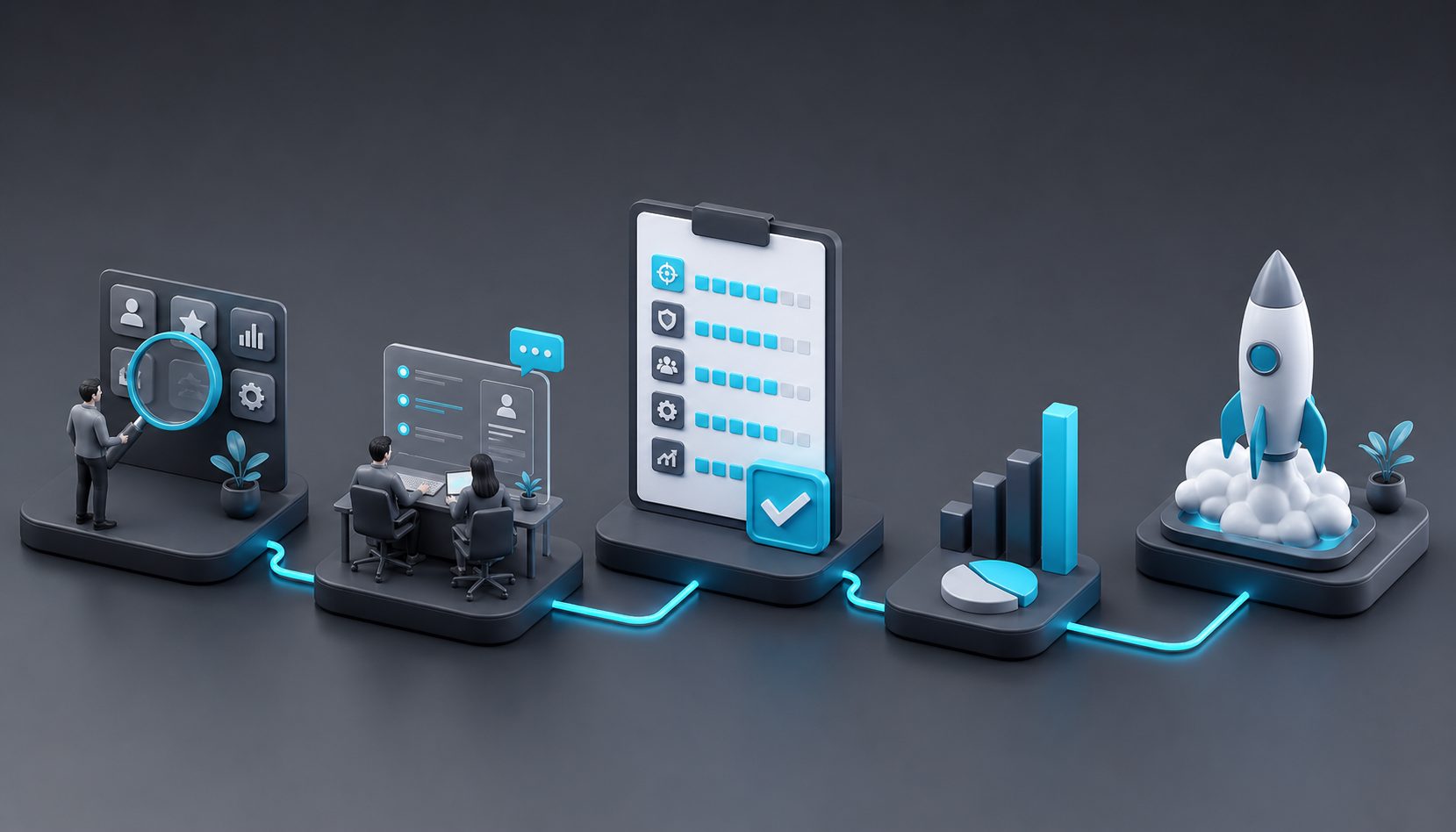
Vendor pages describe features. What buyers need is a filter, and three gates will do it: data, task, governance.
1) Data gate
The agent needs access to the right source of truth — CRM fields, intent signals, call notes, routing rules, product usage where relevant. Fragmented data does not slow an agent down; it makes it produce errors faster.
2) Task gate
Start with one bounded job. Lead enrichment, qualification, routing, follow-up drafting, meeting booking are all reasonable first tasks. Pricing negotiation, complex objections, and custom procurement conversations are not.
3) Governance gate
Every agent needs an escalation path, approval logic, and logging. A vendor who cannot show you where the agent stops and the human starts is not ready for a revenue team.
Score each gate 1 to 5. Anything below 4 on any gate means the pilot stays narrow.
How to pilot in 30 days
Thirty days is enough to prove whether the category fits your stack, provided you test one motion against a clean baseline instead of launching a digital sales team on day one.
- Pick one use case. Inbound qualification, outbound follow-up, or CRM hygiene are the safest starting points.
- Set a baseline first. Current reply rate, meetings booked, qualification rate, speed-to-lead, CRM completeness.
- Run shadow mode for a week. Let the agent suggest actions without sending them. Bad logic surfaces early this way.
- Limit autonomy. Require approval for outbound messages and handoffs at the start.
- Compare against real outcomes. Meetings, qualified opportunities, rep time saved — not activity volume.
- Decide on expansion. Widen scope only if one business metric improved and none got worse.
Where the value actually shows up
Inbound qualification
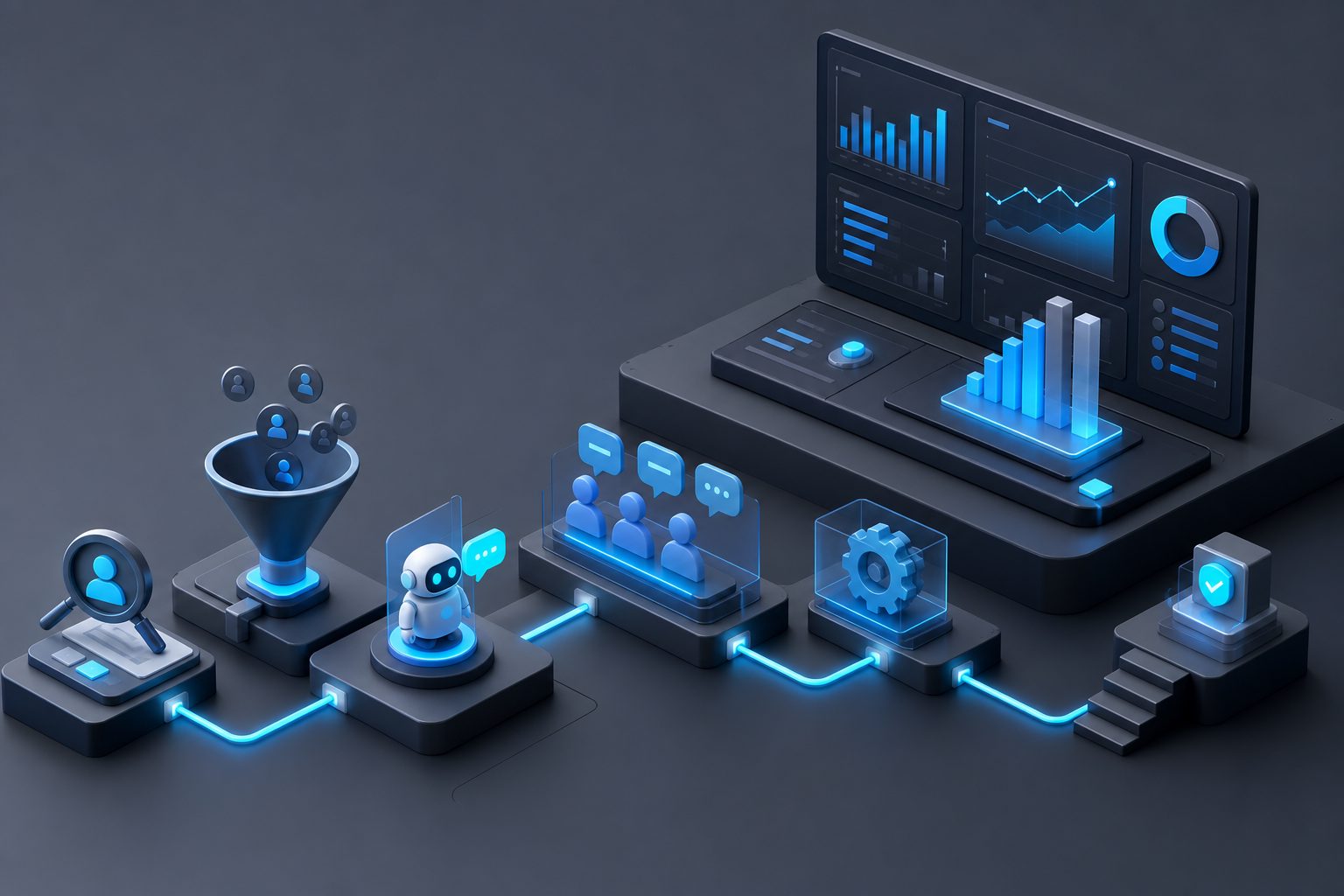
Usually the fastest win. The agent responds immediately, asks the qualifying questions, routes the lead, and books a meeting when fit is clear. SaaS buyers tend to evaluate several vendors at once, so response speed often decides who gets the conversation at all.
Outbound prospecting
Works for lead research, message personalization, and sequencing when targeting rules are clear. It works well on firmographic, intent, or product-usage signals, and poorly on generic templates.
RevOps and CRM hygiene
Teams underestimate boring work. Auto-updating fields, creating tasks, summarizing calls, and logging next steps reduce the slippage that quietly destroys pipeline accuracy. BCG’s framing is useful here: agents are strongest moving work forward across touchpoints, weakest pretending to be full-cycle reps.
Use agents where speed and consistency matter. Keep humans where judgment and trust matter.
Common mistakes that cause failed deployments
The biggest one is automating the whole funnel at once, which produces brittle behavior, messy handoffs, and reps who stop trusting the system.
Others:
- Dirty CRM data. Bad inputs produce bad outputs quickly.
- No clear ownership. Nobody owning thresholds, prompts, or approvals means the pilot drifts.
- Wrong success metric. Meetings booked are not qualified pipeline.
- Too much autonomy too early. Human review is still needed in most SaaS motions.
- Treating every vendor as interchangeable. Some tools suit AI SDR work, others inbound routing, others RevOps automation.
The question to ask is not which tool is most advanced. It is which tool improves one sales motion without creating cleanup work somewhere else.
Frequently asked questions
Are sales agents AI the same as AI SDRs?
Not quite. AI SDRs focus on prospecting and outbound qualification. Sales agents AI covers a wider set — routing, enrichment, follow-up, CRM updates.
What should a SaaS team automate first?
The most repetitive, measurable motion you have. Usually that is inbound lead qualification, meeting booking, or post-call CRM updates.
How do you measure ROI?
Mix efficiency and revenue metrics: speed-to-lead, meetings booked, qualified opportunity rate, CRM completeness, rep hours saved. No single one of these tells the story.
Can sales agents AI replace reps?
Not for most SaaS deals. It replaces chunks of manual work. Trust-building, negotiation, and late-stage deal management still need people.
What makes a good first pilot?
A narrow task, clean data, defined guardrails, and a baseline to compare against. Missing any one of those makes the result hard to trust.
Final take
Sales agents AI earns its keep when it removes friction from a specific workflow. The buyer mindset that works is not more autonomy at any cost — it is the right task, with the right data, under the right guardrails. Teams that hold to that see real movement in meetings, speed, and pipeline quality.
Keep reading

SaaS Vendor Source Code Escrow Clause: Buyer Negotiation Guide
A SaaS vendor source code escrow clause should cover code, cloud deployment, data export, testing, and release triggers. Use this buyer checklist to negotiate continuity protection.

SaaS Contract Breach Cure Period Standard: Buyer Benchmarks and Clause Terms
Learn the SaaS contract breach cure period standard, including 5-, 10-, 15-, and 30-day benchmarks, carve-outs, notice rules, and buyer protections.
SaaS grandfathered pricing policy review: A buyer’s renewal checklist
SaaS grandfathered pricing policy review for buyers: identify hidden repricing triggers, test renewal language, and negotiate defensible price protection.