
SaaS Vendor Source Code Escrow Clause: Buyer Negotiation Guide

A SaaS vendor source code escrow clause protects a buyer if a provider goes bankrupt, stops supporting the service, or materially fails to operate it. A useful clause does more than store source code: it also addresses deployment instructions, infrastructure-as-code, data export, verification, licensing rights, and transition support.
For buyers, the central question is not “Can we obtain the code?” It is “Could a qualified replacement team realistically keep the service running?”

What is a SaaS source code escrow agreement?
A SaaS source code escrow agreement is a contract requiring the vendor to deposit defined software materials with an independent third party. Those materials are released to the customer only after agreed events, such as bankruptcy, permanent discontinuation, or an uncured material breach.
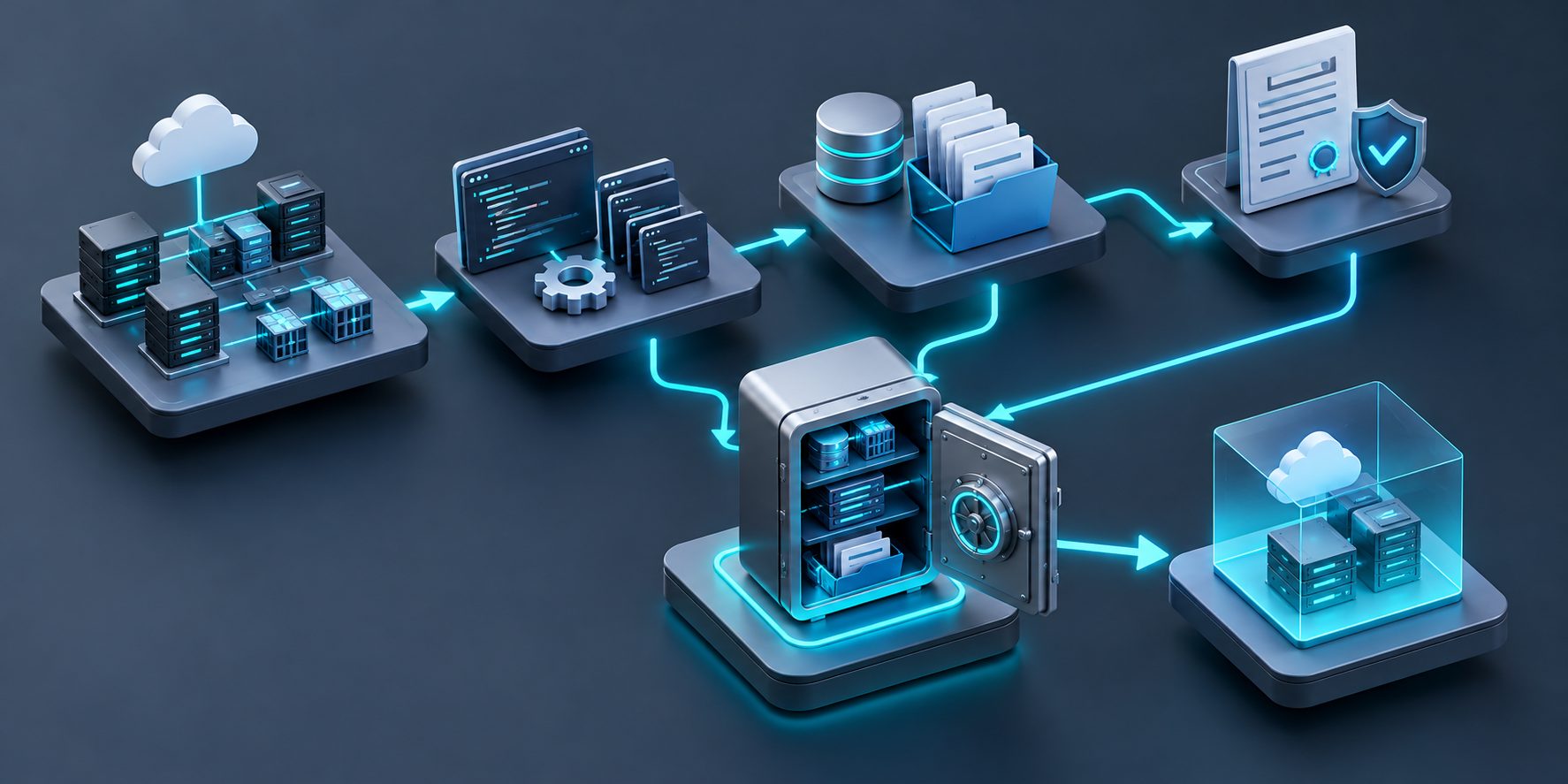
Traditional software escrow often focuses on source code for an installed application. SaaS is different because the customer depends on a live operating environment, hosted databases, cloud services, integrations, credentials, and operational procedures. A source-code-only deposit may therefore be insufficient.
The Virginia Information Technologies Agency’s escrow guidance identifies supplier failure, bankruptcy, acquisition-related support loss, and business-critical technology dependence as reasons to consider escrow. It also emphasizes that the deposit should contain source code rather than only object code. (vita.virginia.gov)
Which materials should the clause require?
The deposit schedule should be written as an operational inventory, not a vague promise to provide “the software.” At minimum, buyers should negotiate for the following:
| Deposit category | What to request |
|---|---|
| Application code | Frontend, backend, services, database schemas, and build configuration |
| Deployment assets | Infrastructure-as-code, container definitions, deployment scripts, CI/CD workflows, and runbooks |
| Technical documentation | Architecture diagrams, dependencies, API specifications, data models, and administrator guides |
| Data portability | Export tools, field mappings, supported formats, and restoration instructions |
| Configuration | Tenant-specific configuration, custom code, feature flags, and integration settings |
| Third-party dependencies | Commercial libraries, open-source components, licenses, and replacement requirements |
| Operating environment | Cloud architecture, regions, required services, monitoring, backup, and recovery procedures |
The distinctive SaaS risk is that source code may not reproduce the production service. A U.S. House procurement document noted that escrowed source code could depend on the provider’s cloud environment and might not operate independently. (house.gov) That is why the clause should require the vendor to identify which cloud services are essential and how they can be replaced or recreated.
A practical buyer framework is to divide the deposit into three layers:
- Build layer: code, dependencies, scripts, and documentation.
- Run layer: infrastructure, configuration, monitoring, secrets-management process, and operational procedures.
- Recover layer: customer data exports, restoration instructions, migration tools, and transition assistance.
This three-layer test is more useful than simply asking whether “the latest source code” is in escrow.
Which release triggers should buyers negotiate?
Release triggers should reflect the customer’s actual continuity risk. Common triggers include:
- Vendor files for bankruptcy, liquidation, or an assignment for creditors.
- Vendor permanently discontinues the service.
- Vendor ceases material support for a defined period.
- A material breach remains uncured after the contractual cure period.
- A vendor acquisition results in the successor refusing to assume support obligations.
- A prolonged outage prevents the customer from accessing the service.
- The vendor loses a critical license, hosting capability, or third-party dependency.
- The vendor fails to maintain the escrow deposit after written notice.
Avoid a trigger that depends only on the vendor’s voluntary admission that it cannot perform. The customer should be able to submit a release notice based on objective evidence, with a defined dispute process and a short response deadline.
Bankruptcy language also requires care. Under U.S. Bankruptcy Code §365(n), certain license rights may be preserved, but SaaS arrangements do not always fit neatly within the statutory concept of a “license.” Practical Law notes that SaaS customers may still lack enforceable service obligations after rejection of an agreement, making a carefully drafted escrow and present-use license important. (content.next.westlaw.com)
What rights should follow release?
Access to files is not the same as permission to use them. The clause should grant the customer a present, enforceable license upon release to:
- Possess, copy, compile, modify, maintain, and operate the software.
- Host the software internally or through a replacement cloud provider.
- Use a third-party service provider for hosting, support, security, and development.
- Correct defects and create adaptations required for continuity.
- Access documentation, data schemas, and deployment materials.
- Use necessary trademarks or branding solely to provide continuity to existing users, if appropriate.
- Transfer the released materials to a successor provider under confidentiality obligations.
The license should be broad enough to support a transition but narrow enough to protect the vendor’s intellectual property outside the release event. Buyers should also confirm that the vendor has rights to deposit third-party code and that key subcontractors or licensors will not block use of the materials.
A useful companion is a SaaS vendor lock-in exit strategy framework, particularly when the buyer is deciding whether escrow, data portability, or a replacement-provider plan offers the best protection.
How should escrow deposits be verified?
An escrow clause without verification can create false confidence. The agreement should require scheduled deposits and independent testing against the production release.
Negotiate for:
- Deposit frequency: after each major release or at least quarterly.
- Version matching: the deposit must correspond to the current production version.
- Completeness review: the agent or qualified reviewer checks required artifacts.
- Build testing: a test environment confirms that the software can compile or deploy.
- Data restoration testing: sample data is exported, restored, and validated.
- Remediation deadlines: missing or outdated materials must be corrected promptly.
- Customer audit rights: the buyer may conduct or commission a limited verification review.
A verification right should not be limited to checking that a file exists. The meaningful test is whether an independent technical team can build a representative environment and perform critical workflows.
The buyer does not necessarily need a full production recreation every year. A proportionate approach is to test the highest-risk path: deploy the core application, connect a documented database, restore a sample export, and execute several business-critical functions. This converts escrow from a document-retention exercise into a continuity control.
What is the difference between source escrow and SaaS continuity escrow?
Source escrow stores software materials for a possible future release. SaaS continuity escrow goes further by addressing the customer’s data, operating environment, and transition mechanics.
| Issue | Source escrow | SaaS continuity escrow |
|---|---|---|
| Primary asset | Source code | Code, infrastructure, data, and operating instructions |
| Main assumption | Customer can run the software | Customer needs a practical recovery path |
| Data protection | Often separate | Included in export and restoration planning |
| Cloud dependency | May be overlooked | Identified and documented |
| Verification | File or code review | Build, deployment, and recovery testing |
| Best fit | Installed or deployable software | Business-critical hosted services |
For highly critical systems, buyers may also negotiate temporary transition support after a release event. This can include a limited number of engineering hours, knowledge-transfer sessions, incident support, and cooperation with a replacement hosting provider.
Buyer checklist for negotiating the clause
Before signing, confirm that the agreement answers these questions:
- What exact materials are deposited?
- Does the deposit include infrastructure-as-code and deployment scripts?
- How often must the vendor update the deposit?
- Who verifies completeness and buildability?
- Does the deposit match the production version?
- Which bankruptcy, outage, breach, and discontinuation events trigger release?
- Can the customer self-host or appoint a third-party operator?
- Are customer data export and restoration tools included?
- What happens if the vendor refuses to cooperate?
- Who pays escrow, testing, release, and transition costs?
- Are third-party dependencies legally transferable?
- Is there a present license that works if the vendor enters bankruptcy?
- How quickly must the escrow agent release the materials?
- What dispute process applies, and does it delay emergency continuity?
This review should sit alongside the broader SaaS MSA negotiation checklist for buyers and the vendor’s data exit terms. Escrow cannot compensate for unclear data ownership, missing export rights, or an agreement that allows the provider to delete records immediately after termination.
Frequently asked questions
Is source code escrow necessary for every SaaS purchase?
No. It is most valuable when the service is business-critical, difficult to replace, heavily customized, or dependent on specialized workflows. For a low-risk commodity tool, strong data export and replacement planning may be more proportionate.
Does escrow guarantee that the customer can keep the SaaS running?
No. It improves the recovery position but does not guarantee successful operation. The result depends on code quality, documentation, cloud dependencies, third-party licenses, credentials, data portability, and access to qualified engineers.
Should customer data be included in the escrow deposit?
Usually, customer data should be handled through a separate, clearly defined data-access and export mechanism. If data is included in escrow, the agreement must address encryption, privacy, retention, restoration, deletion, and compliance responsibilities.
Can a vendor refuse source code escrow?
Yes. Some SaaS providers may argue that their service cannot be reconstructed from source code alone or that the requirement creates disproportionate cost. A buyer can respond with a tiered model: source and deployment escrow for critical systems, verified data export for lower-risk systems, and transition assistance for both.
What is the most commonly missed term?
The most commonly missed term is verification against the live production environment. A deposit that is several releases behind, lacks deployment instructions, or omits proprietary dependencies may satisfy the paperwork while failing the business-continuity objective.
A well-drafted SaaS vendor source code escrow clause should be treated as a recovery plan embedded in the contract. The strongest version connects release triggers, usable rights, current technical deposits, data portability, verification, and post-release transition support. That combination gives the buyer a realistic path forward if the vendor can no longer provide the service.
Keep reading

SaaS Contract Breach Cure Period Standard: Buyer Benchmarks and Clause Terms
Learn the SaaS contract breach cure period standard, including 5-, 10-, 15-, and 30-day benchmarks, carve-outs, notice rules, and buyer protections.
SaaS grandfathered pricing policy review: A buyer’s renewal checklist
SaaS grandfathered pricing policy review for buyers: identify hidden repricing triggers, test renewal language, and negotiate defensible price protection.

Software Purchase Justification Email Template
Use this software purchase justification email template to explain ROI, TCO, alternatives, risks, and the exact approval needed. Copy the framework.