
Automated Sales Playbook Software for Turning Scripts Into Live Conversations

Automated sales playbook software turns your qualification rules, objection responses, discovery questions, routing logic, and follow-up steps into repeatable AI-driven conversations across chat, voice, email, or SMS. The best tools do more than store a playbook: they execute it, collect buyer context, update CRM fields, and escalate to humans when judgment is required.
For SaaS buyers, the harder question is whether the system can follow your selling method without inventing facts, over-qualifying the wrong accounts, or creating messy CRM data.
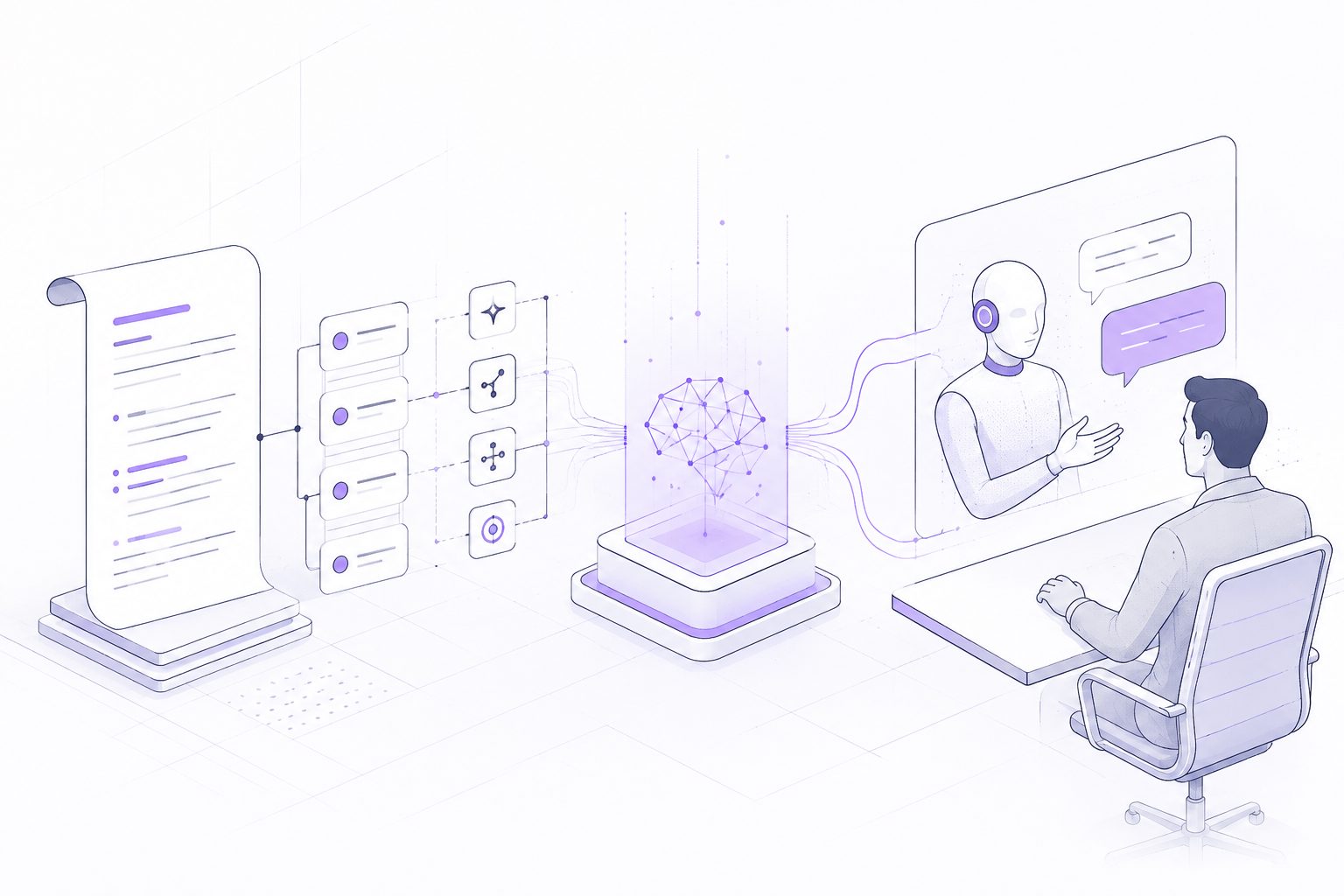
What Is Automated Sales Playbook Software?
Automated sales playbook software is a system that converts sales guidance into executable conversation logic. It uses your ICP criteria, discovery flow, scripts, objection handling, qualification rules, and handoff policies to guide or run buyer conversations.
Traditional playbook tools help reps know what to say. Modern conversational playbook systems help software decide what to ask, when to ask it, what to log, and when to route the lead.
That difference matters because many sales teams already have scripts, call guides, MEDDIC notes, BANT criteria, battlecards, and CRM required fields. The bottleneck is turning that knowledge into consistent buyer interactions.
A useful system should support:
- Structured discovery paths for different buyer segments
- Dynamic branching based on buyer answers
- Objection handling grounded in approved messaging
- CRM field capture without manual rep cleanup
- Human handoff rules for high-intent or risky conversations
- Conversation analytics that show where the playbook succeeds or fails
Salesforce’s State of Sales research has repeatedly found that reps spend a large share of their week on non-selling work; its 2024 reporting cited reps spending 70% of time on non-selling tasks. Playbook execution, not just playbook documentation, has become a serious buying category.
The Buyer Intent: From Static Scripts to Automated Conversations
Most buyers searching this category are not looking for another PDF playbook, enablement library, or generic sales engagement cadence. They want software that can translate a sales script into an automated dialogue.
The tool must handle the messy middle of a real conversation. Buyers do not answer in perfect order. They skip questions, ask pricing early, request integrations, mention competitors, or reveal urgency indirectly.
A script-to-conversation tool needs three layers:
- Knowledge layer: approved product facts, ICP rules, persona notes, qualification criteria, and compliance boundaries.
- Dialogue layer: adaptive questioning, objection handling, clarification prompts, and tone control.
- Action layer: CRM updates, meeting booking, routing, follow-up generation, and escalation.
This is where automated sales playbook software overlaps with AI sales agents, guided selling software, and automated sales conversation software. If you are comparing agentic tools more broadly, the guide to AI sales agents for SaaS buyers gives a wider evaluation lens.
A Practical Framework: The Conversation Playbook Runtime
The best way to evaluate this market is to stop thinking in features and start thinking in runtime behavior. A runtime is how your playbook behaves when a real buyer says something unexpected.
Use this five-part framework when comparing vendors:
| Runtime layer | What it controls | Buyer test question |
|---|---|---|
| Intent detection | Understands what the buyer is trying to do | Can it distinguish research, purchase intent, support, and vendor comparison? |
| Playbook state | Tracks where the buyer is in the sales motion | Does it know which discovery questions are already answered? |
| Decision rules | Applies qualification and routing logic | Can it disqualify politely or escalate high-fit leads fast? |
| Knowledge grounding | Uses approved answers only | Can it refuse or clarify instead of hallucinating? |
| System actions | Updates tools after the conversation | Does it write clean CRM data and trigger the next step? |
This framework exposes a common weakness in many tools: they can generate fluent messages but do not maintain a reliable playbook state. The result is a conversation that sounds polished but asks duplicate questions, misses buying signals, or books meetings for poor-fit accounts.
For deeper routing design, see B2B sales qualification automation, which explains how to turn qualification logic into operational handoff rules.
What Features Actually Matter?
The most important features are the ones that preserve sales quality while reducing manual work. Look for proof that the system can execute your process, not just produce attractive AI copy.
Prioritize these capabilities:
- Playbook ingestion: imports scripts, call guides, FAQs, battlecards, and qualification fields.
- Conversation branching: adapts based on buyer answers rather than forcing a rigid form.
- Approved messaging controls: prevents unsupported claims about pricing, security, legal terms, or roadmap.
- CRM write-back: maps conversation outputs to Salesforce, HubSpot, or another CRM.
- Handoff governance: routes to SDRs, AEs, support, or nurture based on clear criteria.
- Transcript review: lets managers audit calls, chats, and email threads.
- Experiment tracking: compares playbook versions by conversion, qualification accuracy, and meeting quality.
A 2022 academic paper, SmartSales: Sales Script Extraction and Analysis from Sales Chatlog, noted that automatic script extraction can reduce manual effort in identifying effective sales scripts. The buyer takeaway is practical: your vendor should not only run scripts; it should help discover which parts of the script are producing better outcomes.
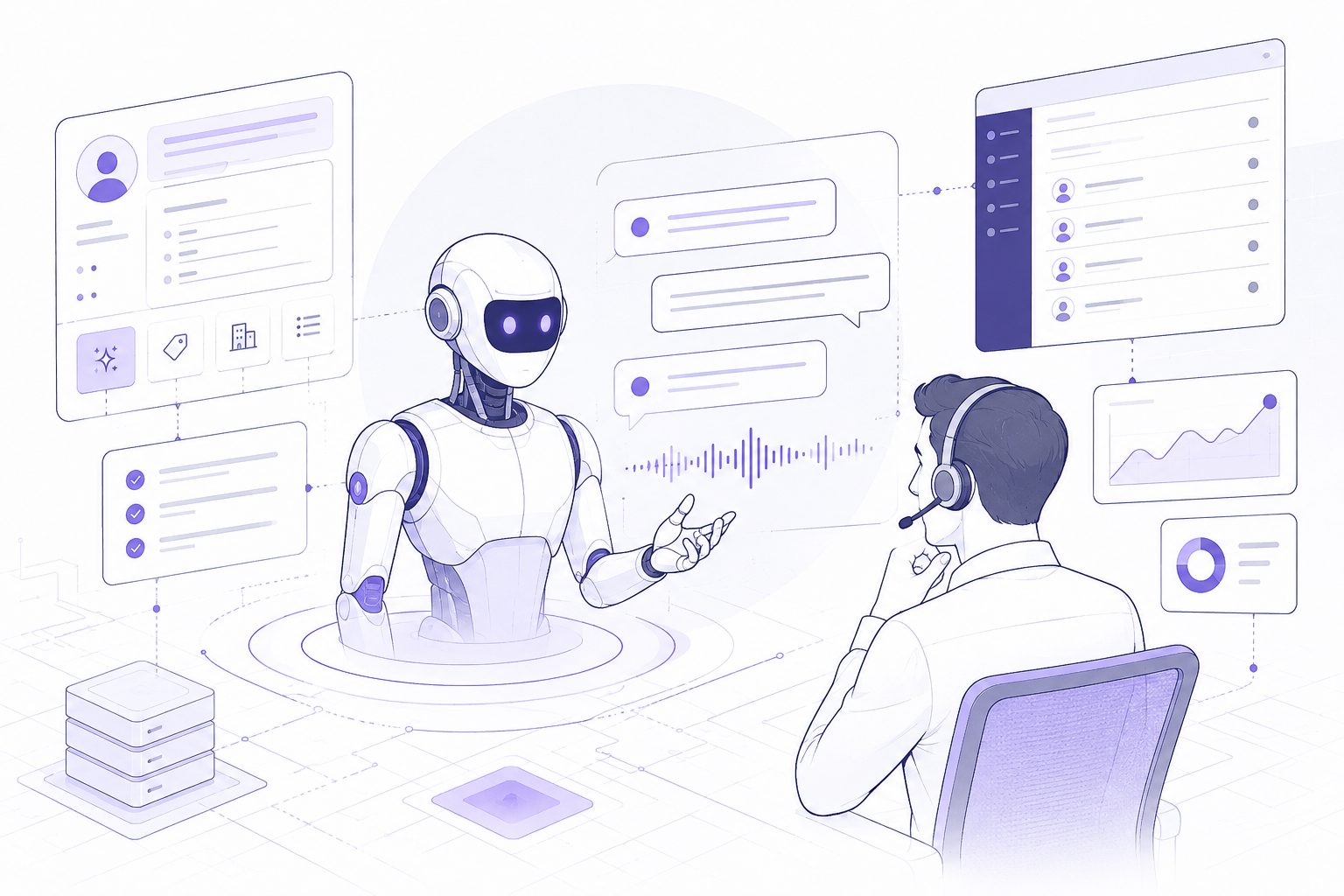
Automated Playbook Tools vs. Sales Engagement Platforms
Sales engagement platforms automate outreach tasks. Automated playbook systems automate conversation decisions. The distinction is important when your goal is to convert sales scripts into live buyer interactions.
| Category | Primary job | Typical strength | Typical limitation |
|---|---|---|---|
| Sales engagement software | Sequences emails, calls, and tasks | Rep productivity and cadence management | Often depends on humans to interpret replies |
| Enablement playbook software | Stores sales guidance and content | Training, consistency, content governance | Does not always run buyer conversations |
| Conversation intelligence | Analyzes calls and meetings | Coaching and insight extraction | Usually observes more than acts |
| Automated sales playbook software | Executes scripted sales logic in conversation | Qualification, routing, follow-up, CRM capture | Requires careful governance and testing |
If your team wants the automated conversation layer specifically, compare this category with automated sales conversation software rather than only traditional enablement tools.
How to Pilot Without Risking Pipeline Quality
A good pilot should measure conversation quality before volume. Do not start by letting AI talk to every inbound lead. Start with a narrow, reversible use case.
Use this four-step pilot plan:
- Choose one motion. Pick inbound demo requests, webinar follow-up, free trial qualification, or reactivation. Avoid complex enterprise negotiations at first.
- Translate the playbook. Convert your script into required fields, optional questions, disqualifiers, escalation triggers, and approved responses.
- Run shadow mode. Let the AI draft or simulate responses while humans approve. Compare outputs against rep decisions.
- Release with guardrails. Start with low-risk segments, monitor transcripts daily, and require human handoff for pricing, legal, security, or strategic accounts.
The strongest pilot metric is not messages sent. It is qualified conversation completion rate: the percentage of conversations that collect enough accurate information to trigger the right next step.
A simple pilot scorecard:
| Metric | Target signal |
|---|---|
| Qualification field completion | Does the AI collect required buyer context? |
| Routing accuracy | Did the lead go to the right owner or workflow? |
| Escalation precision | Did high-intent buyers reach humans quickly? |
| CRM cleanliness | Were fields structured, deduplicated, and usable? |
| Buyer experience | Did the conversation feel helpful rather than scripted? |
Teams evaluating broader autonomous coverage can also compare the approach in 24/7 autonomous sales systems.
Common Failure Modes to Avoid
The biggest risk is not that the AI sounds robotic. It is that the AI sounds confident while doing the wrong sales work.
Watch for these failure modes:
- Script parroting: the system repeats approved lines but does not adapt to the buyer’s actual answer.
- False qualification: the AI marks a lead as qualified because a keyword appeared, not because business criteria were met.
- CRM pollution: transcripts are summarized into vague notes that reps cannot trust.
- Over-automation: buyers with complex needs are trapped in a bot flow instead of reaching a human.
- Message drift: the AI gradually uses language that sales, legal, or product teams never approved.
The remedy is a governance model: approved knowledge sources, measurable routing rules, transcript audits, and version-controlled playbooks. For enterprise teams, the enterprise AI sales agent buyer guide covers governance, risk, and ROI in more detail.
How SaaS Buyers Should Compare Vendors
Choose a vendor by testing how well it preserves your sales method under real conversational pressure. A demo using generic sample scripts is not enough.
Ask each vendor to run the same scenario set:
- A high-fit lead with urgent buying intent
- A student or consultant with no budget
- A buyer asking for an unsupported integration
- A prospect comparing you with a competitor
- A security-conscious enterprise evaluator
- A vague inbound lead who gives partial answers
Then compare outputs across four dimensions: accuracy, adaptability, actionability, and governance.
The winning platform should produce clean CRM data, useful lead summaries, appropriate handoffs, and conversations that match your brand voice. It should also show managers where the playbook is underperforming, not hide every interaction inside a black box.
Where TOPPP Fits in the Evaluation
We build AI sales agents that can support live buyer engagement. If you are evaluating platforms that turn repeatable sales knowledge into consistent, governed buyer conversations, we are one of the options worth testing.
For teams comparing options across the market, start with the broader best AI sales agents in 2026 guide, then narrow into your specific playbook automation use case.
A practical shortlist should include tools that can:
- Capture sales knowledge from your current process
- Turn qualification logic into live dialogue
- Operate across the channels your buyers use
- Keep humans in control of complex decisions
- Produce measurable CRM and pipeline outcomes
Frequently Asked Questions
What is the difference between sales playbook automation and AI sales automation?
Sales playbook automation focuses on executing a defined sales method: questions, qualification rules, objection handling, and next steps. AI sales automation is broader and may include prospecting, enrichment, email writing, forecasting, CRM updates, and call summaries.
Can automated sales playbook software replace SDRs?
It can replace repetitive first-touch qualification in some motions, but it should not replace human judgment for complex, strategic, or high-value opportunities. The safest model is AI for speed and consistency, humans for nuance and relationship-building.
What sales scripts work best for automation?
The best scripts have clear decision points. Discovery flows, inbound qualification, event follow-up, trial conversion, and meeting booking are strong candidates. Negotiation, procurement, legal, and custom enterprise scoping usually need human escalation.
How long does implementation take?
Implementation depends on CRM complexity, channel coverage, compliance requirements, and playbook maturity. A focused inbound qualification pilot can often be scoped faster than a multi-channel outbound program because the entry point and next action are clearer.
What should a buyer ask before signing a contract?
Ask how the vendor handles hallucination prevention, CRM field mapping, transcript audits, prompt or playbook versioning, escalation logic, and failed conversations. Also ask to test your own script, not a vendor-provided sample.
Final Takeaway
Automated sales playbook software is most valuable when it turns proven sales knowledge into measurable conversation execution. The best platform is not simply the one with the most natural-sounding AI. It is the one that follows your playbook, captures reliable buyer context, routes accurately, and improves the sales process over time.
For SaaS buyers, the safest path is to pilot one narrow motion, score real conversations, and expand only after the system proves it can protect both pipeline quality and buyer experience.
Keep reading

Red Flags in SaaS Vendor Agreements: A Buyer’s Review Checklist
Spot red flags in SaaS vendor agreements before signing, from renewal traps and price increases to data rights, liability gaps, and exit costs.

SaaS MSA Negotiation Checklist for Buyers
Use this SaaS MSA negotiation checklist for buyers to review pricing, data, SLAs, liability, indemnity, renewal, and exit terms before signing.

SaaS vendor IP indemnification scope checklist: Buyer review guide
Use this SaaS vendor IP indemnification scope checklist to test covered claims, exclusions, defense rights, remedies, caps, and third-party risk before signing.