
Automated Sales Conversation Software: How SaaS Buyers Should Compare Options
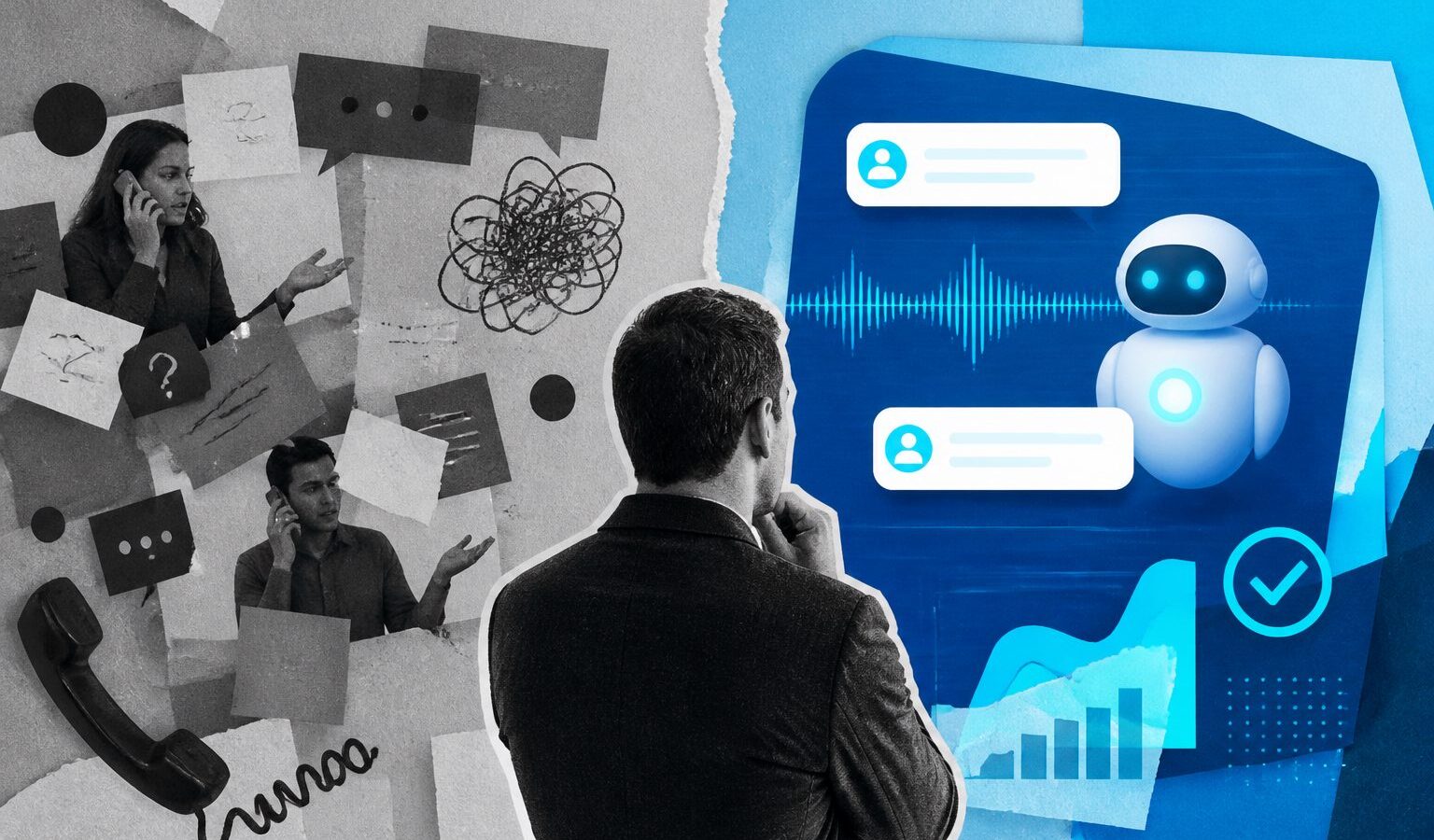
Automated sales conversation software outgrew the voice-bot label a while ago. For SaaS buyers it is a way to qualify inbound leads, follow up faster, book meetings, and route high-intent conversations without adding headcount. Finding a tool is easy. Finding one that fits your funnel, your CRM, and your sales motion is the part that takes work.

What it actually does
It uses AI to handle sales conversations over phone or voice channels: greet a lead, ask qualifying questions, detect intent, capture contact data, book a meeting, hand off to a human when needed. For SaaS that usually means faster response on inbound demo requests and real coverage for after-hours leads.
The systems worth buying do more than speak naturally. They support routing rules, CRM updates, compliance guardrails, and clear escalation paths — because a polished voice by itself moves no pipeline. For a broader buyer framework, the sales agents AI evaluation guide for SaaS buyers pairs well with this.
How it compares with chatbots, IVR, and live SDRs
Chatbots handle text-based intake. IVR handles call routing. Live SDRs handle nuance. Automated sales conversation software is trying to combine speed with consistent qualification. The question for a SaaS team is not which sounds smartest — it is which produces more qualified meetings with less leakage.
| Option | Best at | Weakest at | Buyer signal |
|---|---|---|---|
| Chatbot | Web capture and basic triage | Voice follow-up and live objection handling | High chat traffic, low phone volume |
| IVR | Routing and directory lookups | Qualification and persuasion | Large support-heavy call flows |
| Live SDR | Complex discovery and custom selling | Scale and speed | High-value deals with low volume |
| Automated sales conversation software | Fast qualification, booking, and first response | Very complex, unscripted negotiations | Repetitive lead intake and meeting setting |
This is why many buyers end up testing voice AI and human-led follow-up side by side. Bland AI and Air AI tend to make shortlists on the strength of natural conversation, but the evaluation that matters is whether the system qualifies, routes, and reports in a way your revenue team will trust six months in.

Seven criteria that matter more than demo polish
A strong demo hides weak operations. Score the product instead on conversation control, CRM sync, lead routing, escalation quality, analytics, compliance, and pilotability — those seven decide whether the software supports revenue or just generates noise.
Start with conversation control: can sales ops define the script, branching logic, and disqualifiers without filing an engineering ticket? Then CRM sync — conversation outcomes that do not update records cleanly will drift your reporting within a quarter. Then handoff logic. The common failure is not poor speech quality. It is a lead that qualifies halfway and disappears during transfer.
One internal question settles most of it: can the system run a clean handoff from AI to rep without repeating questions the prospect already answered? A no there means the tool is not ready for a serious funnel.
Where the category wins and where it loses
It wins when lead volume is steady, qualification rules are repeatable, and speed-to-lead matters — demo requests, event follow-up, reactivation campaigns, inbound leads that should not wait for business hours. In those lanes it improves response time and frees rep capacity for higher-value work.
It loses when conversations need judgment, long discovery, or multi-threaded deal work. Enterprise deals, complex pricing objections, and custom procurement paths still belong to people. Which is why experienced buyers treat automation as an assistant layer rather than a replacement.
The strongest fit is a hybrid: AI takes the first conversation, qualified opportunities go to a rep. A vendor who cannot explain that handoff in detail is not a fit.
How to pilot it in 30 days without betting the funnel
A pilot needs to prove three things: the system talks to the right lead, captures the right data, and transfers cleanly. One segment, one call flow, one outcome — inbound demo requests from a single region or product line, for instance.
- Define one success outcome, such as booked meetings or qualified transfers.
- Load only the rules that flow needs.
- Measure answer rate, qualification accuracy, and handoff success.
- Review failed conversations weekly and tighten prompts or routing.
- Compare against your current baseline, not against the vendor’s numbers.
The toppp.ai homepage is a reasonable starting point for comparing product positioning before narrowing a shortlist. A good pilot tends to be small, measurable, and boring — which is a signal rather than a disappointment.
Red flags
The same warnings surface across buyer evaluations. The product sounds impressive but cannot explain what happens after qualification. Reporting is vague or leans on manual review. The vendor talks about “natural conversation” while dodging specifics on routing, CRM updates, and fallback paths.
Over-automation is another. A system that tries to handle every objection with no human escape hatch will burn leads rather than convert them. Watch for brittle setup too: if every small change needs a service ticket, the tool slows sales ops down instead of speeding it up.
The safer vendors make control visible. You should be able to see the script, the rules, the transfer point, and the metrics without asking anyone.
Frequently asked questions
Is this the same as an AI phone agent?
Not always. An AI phone agent is the voice-facing layer. Automated sales conversation software includes the workflow around it — qualification, routing, booking, CRM updates, reporting.
Does it replace SDRs?
Usually not. It absorbs repetitive first-touch work and low-complexity follow-up, then hands qualified opportunities to SDRs or AEs.
What integrations matter most?
CRM, calendar, routing, and call logging. Weakness in those makes the rest of the stack harder to trust.
Best use case for SaaS teams?
Inbound lead qualification and meeting setting. Clear rules, measurable ROI.
How should buyers judge quality?
By conversion outcomes, transfer accuracy, and operational control. Not by how human the voice sounds in a demo.
Final take
This category deserves serious evaluation when speed, repeatability, and clean handoffs matter more than fully custom discovery. The winning choice is rarely the flashiest demo — it is the one that fits your funnel, integrates cleanly, and proves itself in a controlled pilot.
With a wide shortlist, compare on workflow control first, voice quality second, reporting third. That ordering tends to reveal which platform can actually carry revenue.
Keep reading

SaaS Vendor Source Code Escrow Clause: Buyer Negotiation Guide
A SaaS vendor source code escrow clause should cover code, cloud deployment, data export, testing, and release triggers. Use this buyer checklist to negotiate continuity protection.

SaaS Contract Breach Cure Period Standard: Buyer Benchmarks and Clause Terms
Learn the SaaS contract breach cure period standard, including 5-, 10-, 15-, and 30-day benchmarks, carve-outs, notice rules, and buyer protections.

SaaS grandfathered pricing policy review: A buyer’s renewal checklist
SaaS grandfathered pricing policy review for buyers: identify hidden repricing triggers, test renewal language, and negotiate defensible price protection.