
Automated Sales Reps Software: A SaaS Buyer’s Evaluation Guide

Automated sales reps software helps SaaS teams qualify leads, run outreach, answer buyer questions, book meetings, update CRM records, and route high-intent accounts without assigning every step to a human rep. The right choice depends on your sales motion, data quality, approval rules, and revenue risk—not on which tool promises the most autonomy.
Most buying mistakes happen when teams compare AI sales agents as if they all do the same job. They do not. Some act like an AI SDR for outbound prospecting. Some qualify inbound website visitors. Some automate voice calls. Others sit inside the CRM and assist human reps with research, follow-ups, and next steps.
What is automated sales reps software?
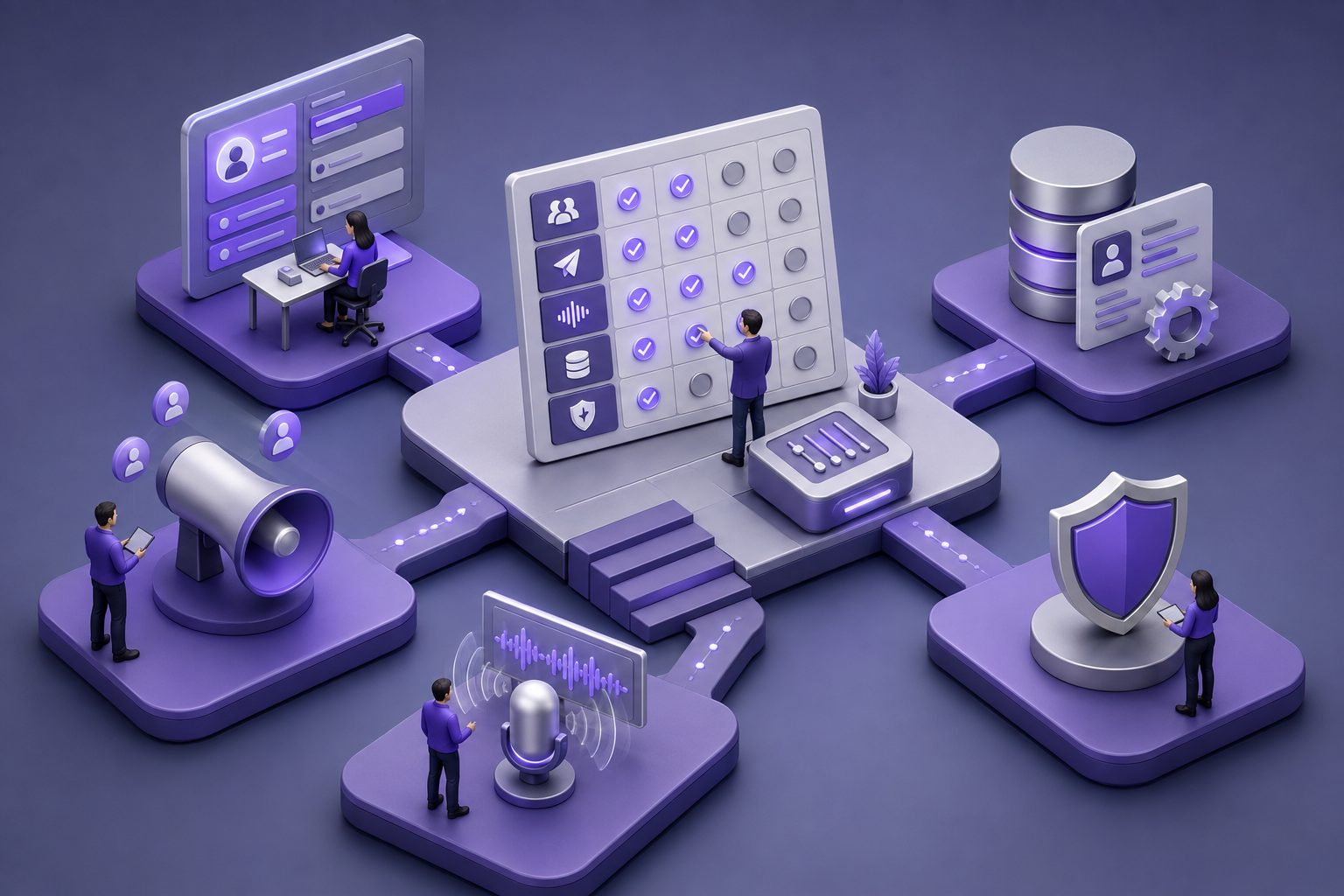
Automated sales reps software is a category of AI-enabled sales tools that performs repeatable sales work with limited human input. It can research accounts, personalize outreach, score intent, hold text or voice conversations, schedule meetings, summarize interactions, and sync structured activity back to CRM systems.
For SaaS buyers, the important distinction is task automation versus rep replacement. A reliable system should remove low-value manual work while preserving human control over brand voice, deal strategy, pricing exceptions, and complex buyer conversations.
Salesforce describes AI sales agents as systems that can support reps by engaging inbound leads, answering questions, and scheduling meetings, while also differentiating agentic tools from simpler rules-based bots. That distinction matters because a sequence tool can automate steps, but an AI sales agent must reason over context, policy, and buyer intent.
Which sales motion should you automate first?
Automate the motion where response speed, consistency, and data capture matter more than relationship depth. For most SaaS companies, that means inbound qualification, meeting scheduling, CRM updates, post-demo follow-up, or low-complexity outbound research before full-cycle autonomous selling.
Use this practical order of operations:
- Inbound speed-to-lead: qualify demo requests, answer common fit questions, and route buyers.
- CRM hygiene: capture notes, update fields, and log activities automatically.
- Follow-up orchestration: send approved recap emails and next-step reminders.
- Outbound research: enrich accounts and draft first-touch messages for review.
- Autonomous outreach or voice: scale only after messaging, compliance, and routing are proven.
This mirrors a simple risk rule: automate low-risk, high-frequency workflows first. If a workflow can create legal, pricing, or reputation risk, keep a human approval gate.
For a broader category view, toppp.ai’s guide to AI sales agents and what SaaS buyers should compare explains how agent capabilities differ across the funnel.
A buyer-fit matrix for SaaS teams
The fastest way to shortlist automated sales reps software is to map the tool to your revenue motion. A product-led SaaS team with thousands of trial users needs different automation than an enterprise SaaS company selling six-month procurement cycles.
| SaaS sales motion | Best automation fit | Avoid over-automating | Primary success metric |
|---|---|---|---|
| High-volume inbound demo requests | Qualification chat, routing, scheduling | Pricing negotiation and custom security answers | Qualified meeting rate |
| Product-led growth with trials | Usage-based nudges, expansion prompts, lifecycle email | Enterprise handoff without context | Trial-to-paid conversion |
| Outbound SDR team | Account research, enrichment, approved message drafts | Fully autonomous cold outreach before deliverability checks | Positive reply rate |
| Enterprise sales | CRM updates, call summaries, stakeholder mapping | Proposal terms, procurement, legal redlines | Rep selling time and stage progression |
| 24/7 global demand capture | Website agent, voice intake, calendar booking | Unsupported claims in regulated markets | After-hours conversion rate |
Start with the job to be done, not the vendor category. A voice agent, AI SDR, and CRM copilot may all be “sales automation,” but they carry very different risk and ROI profiles.
The 15-workflow scorecard: what to test before buying
A useful demo should prove that the software can complete your actual workflows, not just show a polished generic conversation. Score each workflow from 0 to 3: 0 means unsupported, 1 means manual workaround, 2 means usable with review, and 3 means production-ready.
| Workflow | What “production-ready” looks like |
|---|---|
| Lead capture | Creates or updates the right CRM record without duplicates |
| ICP qualification | Applies your qualification logic, not a generic script |
| Buyer question answering | Uses approved knowledge and cites internal source material |
| Objection handling | Escalates when confidence is low or pricing is sensitive |
| Calendar booking | Handles time zones, ownership rules, and rescheduling |
| CRM field updates | Writes structured fields, notes, and next steps accurately |
| Account research | Pulls relevant context without hallucinated company facts |
| Outreach drafting | Matches brand voice and avoids spam-like personalization |
| Follow-up sequencing | Stops when the buyer replies, books, or opts out |
| Call or chat handoff | Transfers context to the right human owner |
| Compliance controls | Supports consent, opt-out, audit logs, and permissions |
| Analytics | Shows conversion by workflow, channel, segment, and owner |
| Admin controls | Lets RevOps edit playbooks without engineering bottlenecks |
| Integrations | Connects to CRM, email, calendar, enrichment, and support tools |
| Governance | Allows human approval for high-risk actions |
A vendor that scores high on autonomy but low on governance may not be ready for many SaaS sales environments. If you need a deeper governance lens, see toppp.ai’s guide to enterprise AI sales agent fit, governance, and ROI.
What capabilities separate strong tools from shallow automation?
Strong automated sales reps software combines conversation quality, structured data operations, workflow controls, and measurable revenue attribution. Shallow tools usually do one visible thing well—such as writing emails—but fail when they must handle exceptions, sync data, or follow ownership rules.
Look for these capabilities during evaluation:
- Context memory across chat, email, calls, CRM notes, and product usage.
- Playbook control so RevOps can define qualification rules and escalation paths.
- Human-in-the-loop approvals for risky actions such as discounts, claims, or enterprise replies.
- CRM-native writeback with field-level mapping and duplicate prevention.
- Channel awareness across email, website chat, phone, SMS, and calendar.
- Auditability so managers can inspect what the agent said, changed, and why.
- Performance reporting tied to pipeline outcomes, not just tasks completed.
Many comparison lists under-serve buyers here. Feature tables often mention “CRM integration,” but the real question is whether the system can update the correct object, respect ownership, preserve attribution, and avoid corrupting pipeline reporting.
How should SaaS buyers calculate ROI?
Calculate ROI by workflow, not by headcount replacement. The cleanest model compares recovered selling time, incremental qualified meetings, faster response conversion, reduced missed follow-ups, and lower RevOps cleanup against software, implementation, and supervision costs.
A simple SaaS buyer ROI model:
Monthly value = recovered rep hours + incremental qualified pipeline + reduced operational rework − software and admin cost.
For example, if five reps each recover six hours per month from CRM updates and follow-up drafting, that is 30 hours returned to selling. If inbound automation also creates eight additional qualified meetings per month, the business case becomes easier to validate than a vague promise of “AI productivity.”
Salesforce has reported that reps spend a large share of time on non-selling work, a point echoed across modern sales productivity research. Buyers should still insist on their own baseline. Measure current response time, no-show rate, CRM completeness, and meeting-to-opportunity conversion before rollout.
For a more ROI-specific framework, use toppp.ai’s guide to AI sales agents with the highest ROI.
Where do automated reps fail?
Automated reps fail when the buyer journey is ambiguous, the knowledge base is thin, the CRM is messy, or the company gives the system too much autonomy too early. The failure is usually operational, not just technical.
Common failure modes include:
- The AI books meetings with poor-fit accounts because qualification rules are vague.
- Outreach sounds personalized but is based on weak or incorrect account signals.
- CRM records become cluttered with duplicate contacts and inconsistent fields.
- The system answers product, security, or pricing questions beyond approved knowledge.
- Human reps distrust the tool because handoff notes are incomplete.
- Managers cannot tell whether pipeline improved or activity volume merely increased.
The best prevention is a controlled pilot. Pick one segment, one channel, one workflow, and one measurable outcome. Do not roll out across every rep, region, and motion at once.
How to run a 30-day pilot without creating sales chaos
A 30-day pilot should prove operational fit before enterprise rollout. Limit the scope, define success metrics, document escalation rules, and compare performance against a pre-pilot baseline. The point is to prove that this workflow works for your team—not to demonstrate that AI works in general.
Use this pilot plan:
- Days 1–3: Baseline
- Capture current response time, qualification rate, booking rate, CRM completeness, and rep time spent.
- Days 4–7: Knowledge and playbook setup
- Upload approved messaging, ICP rules, routing logic, objection guidance, and disallowed claims.
- Days 8–14: Internal shadow mode
- Let the agent draft, score, or summarize while humans approve every action.
- Days 15–24: Limited live automation
- Turn on one workflow, such as inbound qualification or post-demo follow-up.
- Days 25–30: Decision review
- Compare baseline versus pilot results and inspect error logs, handoffs, and rep feedback.
A good vendor should welcome this structure. If a tool can only be evaluated through a generic sandbox, it may not be ready for your sales motion.
Vendor questions that reveal the real product
The best sales demo questions force vendors to show operations, governance, and data handling. Ask fewer broad questions and more workflow-specific ones.
Use these questions:
- What exact sales tasks can the agent complete without human approval?
- Which actions require approval, and can approval rules vary by segment or deal size?
- How does the system know when to escalate to a human rep?
- Can RevOps edit qualification logic without engineering support?
- How are CRM duplicates prevented?
- Which CRM objects and fields can the agent read and write?
- How are buyer opt-outs, consent, and audit logs handled?
- Can the tool run in shadow mode before live deployment?
- What metrics separate agent activity from human rep activity?
- How is product knowledge updated, versioned, and restricted?
If your main use case is always-on inbound capture, toppp.ai’s guide to 24/7 autonomous sales systems for SaaS buyers offers a more focused comparison lens.
Common mistakes when choosing automated sales reps software
The biggest mistake is buying for autonomy before buying for fit. SaaS teams often get excited by a demo where an AI agent completes a conversation, but the real test is whether it follows your funnel rules every day.
Avoid these mistakes:
- Choosing a tool because it promises to “replace SDRs.”
- Ignoring CRM data quality until implementation.
- Letting marketing, sales, and RevOps define different qualification rules.
- Measuring only meetings booked, not meeting quality.
- Automating outbound before deliverability and brand voice are controlled.
- Skipping human approval for complex accounts.
- Failing to test handoff quality with real reps.
Treat automated sales reps as part of a virtual sales team. The software needs a role, a manager, boundaries, performance metrics, and a process for continuous improvement. For stack-level planning, see toppp.ai’s guide to virtual sales team software.
Frequently asked questions
Is automated sales reps software the same as AI SDR software?
Not exactly. AI SDR software usually focuses on prospecting, outreach, qualification, and meeting booking. Automated sales reps software is broader and may include inbound chat, voice agents, CRM automation, follow-up workflows, expansion prompts, and sales assistant features.
Can automated sales reps replace human salespeople?
They can replace some repetitive tasks, but they should not replace human judgment in complex SaaS deals. Humans are still better suited for discovery, negotiation, relationship building, multi-stakeholder alignment, and strategic account planning.
What is the best first workflow to automate?
For many SaaS companies, inbound qualification is the best first workflow because it is measurable, high-volume, and time-sensitive. CRM updates and follow-up summaries are also strong starting points because they reduce admin work without exposing the buyer experience to much risk.
How long does implementation take?
A narrow pilot can often be evaluated in about 30 days if CRM access, knowledge sources, routing rules, and success metrics are ready. Full rollout takes longer when multiple regions, products, sales teams, or compliance requirements are involved.
What should buyers prioritize: voice, email, chat, or CRM automation?
Prioritize the channel where the revenue leak is largest. If demo requests go unanswered after hours, start with chat or voice intake. If reps waste time on admin, start with CRM automation. If outbound research is slow, start with account intelligence and message drafting.
Final recommendation
Choose automated sales reps software by matching the tool to a specific SaaS revenue workflow, then validate it with a controlled pilot. The best platform improves qualified pipeline while protecting buyer experience, CRM integrity, and sales governance—not necessarily the one that sounds most human or automates the most tasks.
Before signing a contract, require proof in four areas: workflow completion, human escalation, CRM writeback, and measurable revenue impact. If those are strong, automation can give reps more time to sell. If they are weak, it will simply create faster noise.
Keep reading

Red Flags in SaaS Vendor Agreements: A Buyer’s Review Checklist
Spot red flags in SaaS vendor agreements before signing, from renewal traps and price increases to data rights, liability gaps, and exit costs.

SaaS MSA Negotiation Checklist for Buyers
Use this SaaS MSA negotiation checklist for buyers to review pricing, data, SLAs, liability, indemnity, renewal, and exit terms before signing.

SaaS vendor IP indemnification scope checklist: Buyer review guide
Use this SaaS vendor IP indemnification scope checklist to test covered claims, exclusions, defense rights, remedies, caps, and third-party risk before signing.