
AI Sales Agents for Business: Enterprise Buyer Guide
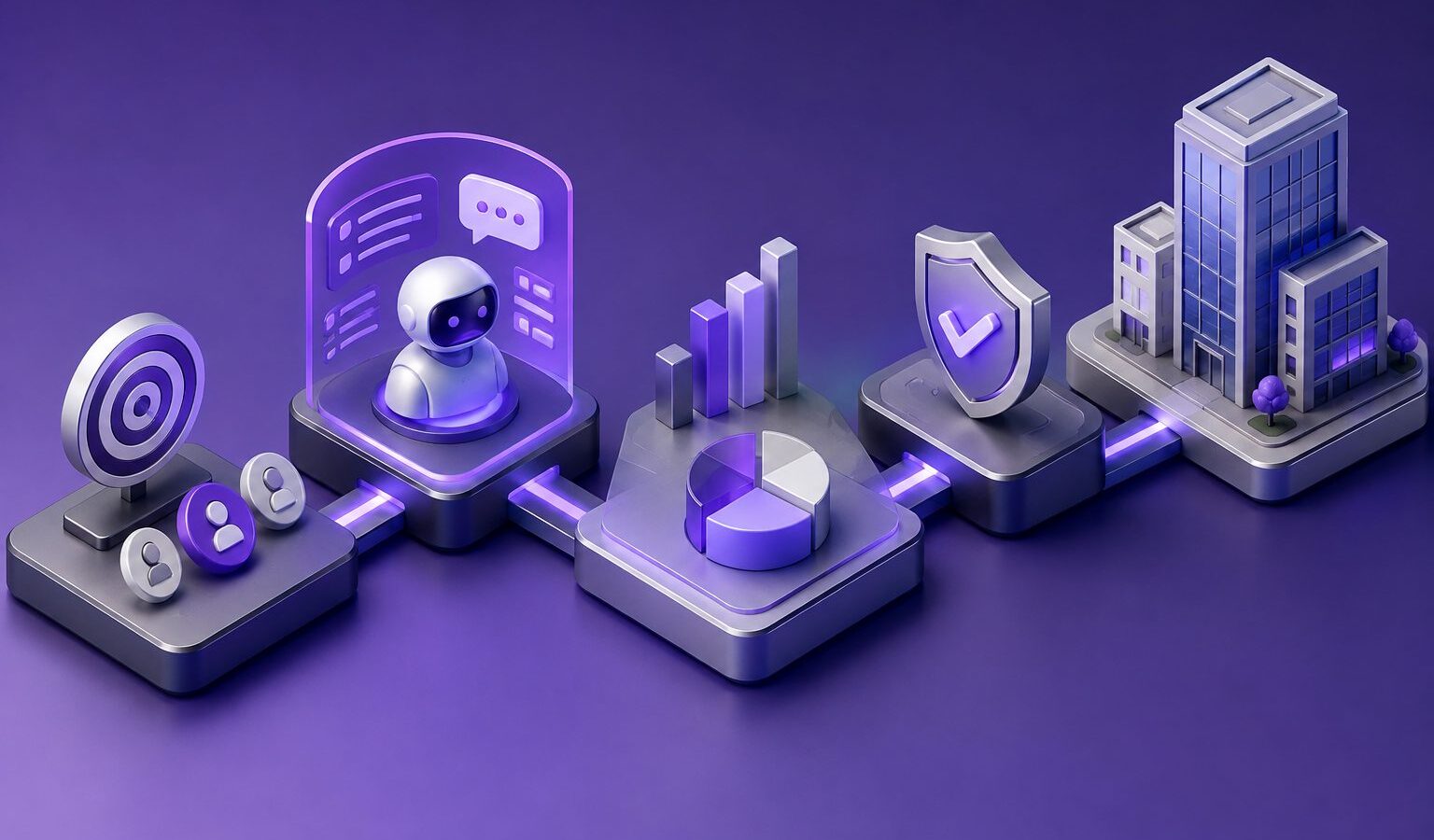
AI sales agents for business are software agents that research accounts, qualify leads, engage buyers, update CRM records, and trigger sales workflows with varying levels of autonomy. For enterprise buyers, the real question is not “Which agent is most advanced?” It is “Which agent can safely improve our sales motion without damaging data quality, brand trust, or pipeline discipline?”
The category has moved beyond chatbots and email generators. Today’s buyer must compare AI SDRs, inbound qualification agents, meeting-prep copilots, CRM automation agents, and full-cycle autonomous sales systems. The strongest choice depends on your funnel shape, governance requirements, sales cycle complexity, and tolerance for automated buyer-facing action.

What is an AI sales agent?
An AI sales agent is a goal-directed sales system that can interpret buyer or account context, decide the next appropriate action, and execute approved sales tasks across connected tools. Unlike a basic chatbot, it should use CRM data, sales rules, knowledge sources, and workflow permissions to complete a defined commercial job.
Industry analysts often describe AI sales agents as systems that can support prospecting, engagement, coaching, and sales productivity inside the revenue workflow. That framing is useful, but enterprise buyers should go one step deeper: define the agent by the decision rights it receives.
A sales agent may only recommend an action, such as suggesting a follow-up email. It may draft but require approval. Or it may autonomously send messages, qualify leads, book meetings, and update opportunity fields. Those three autonomy levels have very different risk profiles.
For a deeper SaaS-specific breakdown, toppp.ai’s guide to an enterprise AI sales agent explains how fit, governance, and ROI should be evaluated before procurement.
Which sales motion should you automate first?
The best first use case is the sales task with high volume, clear rules, reliable data, and low downside if the agent needs human correction. In most B2B SaaS teams, that means inbound lead qualification, meeting preparation, follow-up drafting, CRM hygiene, or account research before fully autonomous outbound.
A useful prioritization model is the VCTR test:
| Dimension | What to check | Strong first use case |
|---|---|---|
| Volume | Does the task happen often enough to matter? | Hundreds of monthly inbound leads or rep research tasks |
| Clarity | Are the rules explicit? | Clear ICP, routing, qualification, and disqualification criteria |
| Trust impact | Could a mistake hurt a buyer relationship? | Internal summaries before external outreach |
| Revenue proximity | Does the task affect speed-to-lead or conversion? | Fast response, accurate routing, timely follow-up |
This is where many AI sales agents for business disappoint. They are purchased to “replace SDR work” before the company has clean routing logic, approved messaging, and reliable enrichment sources. The safer sequence is automate internal work first, then low-risk buyer interactions, then higher-autonomy selling.
How should enterprise buyers compare AI sales agents?
Enterprise buyers should compare AI sales agents by job fit, system integration, governance, measurement, and change management—not by feature count alone. A long list of capabilities means little if the agent cannot operate inside your CRM, respect your sales playbook, or produce auditable decisions.
Use this five-part scorecard:
- Workflow fit: Which exact job will the agent own: inbound qualification, outbound prospecting, sales research, call preparation, follow-up, CRM updates, or routing?
- Data access: Can it use CRM fields, website behavior, product usage, intent data, call notes, and approved knowledge bases?
- Control model: Can admins set approval thresholds, escalation rules, blocked claims, territory logic, and message limits?
- Observability: Can managers see why the agent took an action, what source it used, and what outcome followed?
- ROI traceability: Can the vendor measure lift against a baseline rather than reporting vanity activity?
If the buying team is comparing multiple categories, toppp.ai’s AI sales agents comparison guide is useful for separating automation, augmentation, and autonomous selling.
What governance does a business-grade agent need?
A business-grade AI sales agent needs role-based access, source control, approval workflows, audit logs, performance monitoring, and rollback procedures. These controls matter because sales agents touch revenue data, customer communications, competitive claims, pricing guidance, and sometimes regulated buyer information.
The NIST AI Risk Management Framework is not sales-specific, but its emphasis on governing, mapping, measuring, and managing AI risk applies directly to revenue automation. Sales leaders can translate that into practical controls:
- Govern: Assign an owner for agent behavior, prompt changes, approved data sources, and escalation policy.
- Map: Document where the agent acts in the funnel and which systems it can modify.
- Measure: Track accuracy, conversion, complaint rate, unsubscribe rate, meeting quality, and CRM correction rate.
- Manage: Create a human fallback path, pause conditions, and a recurring review process.
For AI sales agents for business, governance should not be treated as a legal afterthought. It is part of performance. A poorly governed agent may generate meetings while also creating bad-fit pipeline, deliverability problems, or brand-damaging messages.
What ROI should you expect and how should you measure it?
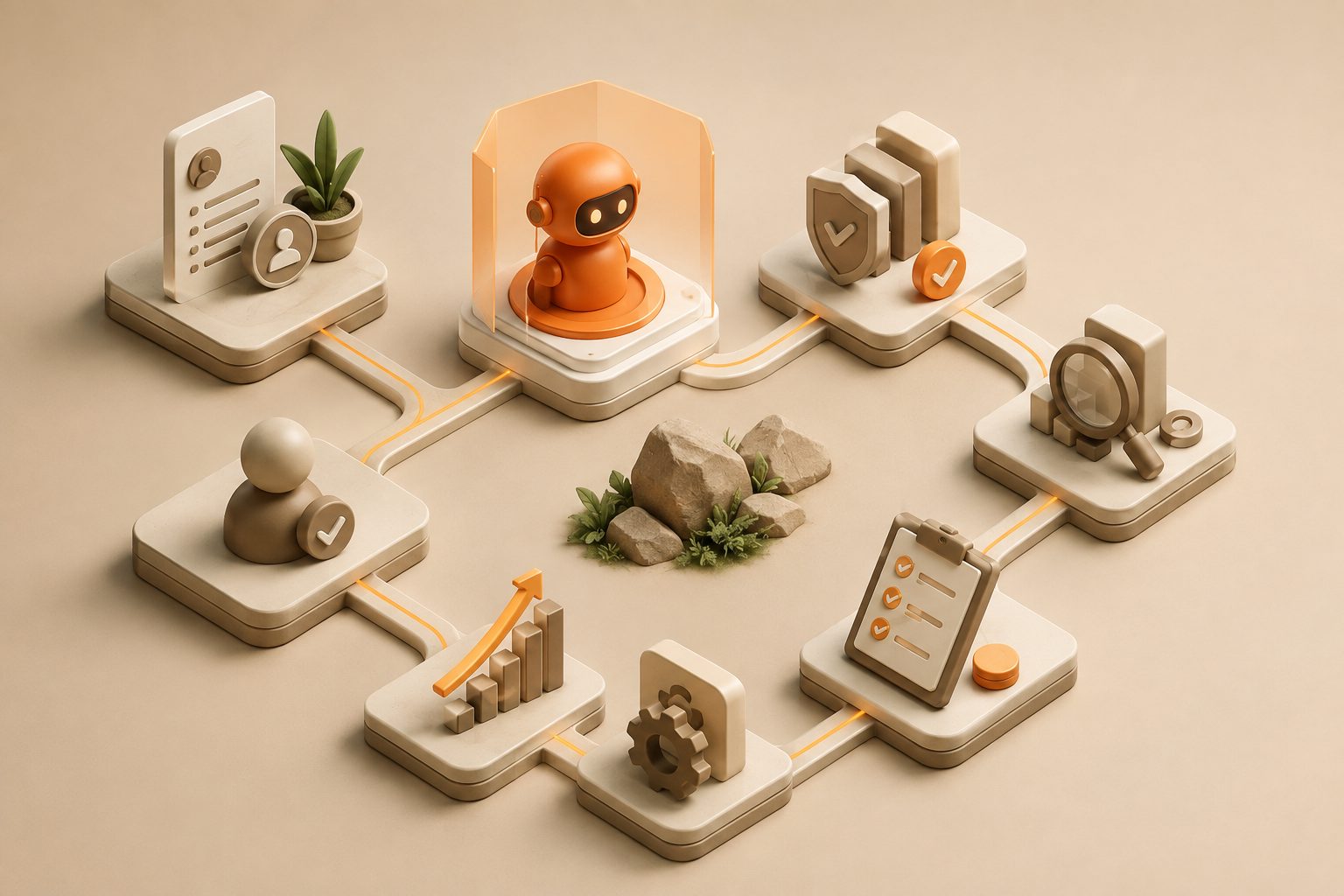
ROI should be measured as incremental pipeline quality and labor leverage, not simply more automated activity. The best metrics compare a pre-agent baseline with pilot results across response speed, qualified meeting rate, conversion to opportunity, rep time saved, and downstream win quality.
A practical pilot dashboard should include:
| Metric | Why it matters | Watch-out |
|---|---|---|
| Speed-to-lead | Faster replies often improve inbound conversion | Speed is useless if routing is wrong |
| Qualified meeting rate | Shows whether the agent improves SDR capacity | Must exclude poor-fit bookings |
| Opportunity conversion | Tests meeting quality | Needs at least one sales cycle for confidence |
| CRM correction rate | Reveals hidden admin burden | High correction erases productivity gains |
| Buyer complaint/unsubscribe rate | Protects brand and deliverability | Monitor by segment and sequence |
| Rep time saved | Captures operating leverage | Validate with manager review, not estimates only |
A straightforward benchmark for procurement teams is the 10-10-10 pilot rule: select 10 reps or one SDR pod, run 10 business days of shadow mode, then 10 business days of controlled production. In shadow mode, the agent recommends actions but does not execute them. In production, it acts only in pre-approved scenarios. This gives buyers a clean before-and-after comparison without exposing the full funnel on day one.
For a more detailed ROI lens, see toppp.ai’s framework for AI sales agents with the highest ROI.
Inbound, outbound, or full-cycle: which agent type fits?
Inbound agents are usually the safest starting point; outbound agents require stronger data quality and messaging control; full-cycle agents require the highest governance maturity. The right choice depends on whether your bottleneck is response time, prospecting volume, rep preparation, or sales administration.
Inbound qualification agents work best when your website, demo forms, or product-led signups create more leads than your team can respond to quickly. They can ask qualification questions, route accounts, recommend content, and book meetings.
Outbound AI SDRs can research accounts, personalize outreach, and manage follow-up sequences. They are powerful, but they carry higher deliverability and brand risks because they initiate conversations with buyers who did not request contact.
Sales enablement and meeting-prep agents are lower risk because they support reps rather than directly representing the company. They summarize accounts, surface objections, suggest discovery questions, and prepare follow-up drafts.
CRM and workflow agents update fields, summarize calls, create tasks, and enforce next steps. These often produce fast productivity gains because they remove administrative drag.
Teams evaluating always-on coverage should also review toppp.ai’s guide to 24/7 autonomous sales systems.
What should be included in an enterprise pilot?
An enterprise pilot should include a narrow use case, baseline data, approved knowledge sources, human review rules, measurable success criteria, and a go/no-go threshold. Without these, a pilot becomes a demo extension rather than a buying decision.
Use this pilot sequence:
- Define the job: Example: qualify inbound demo requests from companies with 50–2,000 employees in approved territories.
- Freeze the baseline: Capture current response time, booking rate, show rate, opportunity conversion, and rep hours spent.
- Limit the data sources: Start with CRM, form data, approved messaging, product pages, and routing rules.
- Run shadow mode: Compare agent recommendations with rep actions before allowing automation.
- Approve limited execution: Let the agent send only specific message types or update low-risk CRM fields.
- Review exceptions: Analyze disqualifications, escalations, corrections, buyer objections, and rep overrides.
- Decide expansion: Scale only if quality metrics improve, not just activity volume.
This structure favors durable adoption over flashy automation. It also gives security, legal, revenue operations, and sales leadership a shared evidence base.
Common mistakes when buying AI sales agents
The biggest mistake is buying an agent before defining the sales process it must follow. AI can accelerate a strong process, but it will expose a weak one. If qualification rules are vague, CRM fields are stale, or territories are disputed, automation will multiply those problems.
Other common mistakes include:
- choosing a tool because it promises “autonomy” without clarifying approval boundaries;
- measuring emails sent instead of qualified opportunities created;
- ignoring deliverability and unsubscribe risk in outbound programs;
- giving the agent too many disconnected knowledge sources;
- skipping rep adoption and manager coaching;
- failing to plan who maintains prompts, playbooks, and data mappings.
AI sales agents for business should be purchased like revenue infrastructure, not like a campaign tool. The buyer should know who owns the agent, how it will be evaluated, and when it should stop acting.
Frequently Asked Questions
Are AI sales agents the same as AI SDRs?
No. An AI SDR is one type of AI sales agent focused mainly on prospecting, outreach, qualification, and meeting booking. AI sales agents can also support inbound routing, account research, CRM updates, sales coaching, proposal assistance, and post-call follow-up.
Can an AI sales agent replace a human sales rep?
In enterprise SaaS, replacement is rarely the right starting goal. The better use case is removing repetitive work, speeding up buyer response, improving qualification consistency, and giving reps better context. Human judgment still matters for complex discovery, negotiation, trust-building, and strategic accounts.
What systems should an AI sales agent integrate with?
At minimum, it should integrate with your CRM, calendar, email or engagement platform, approved knowledge base, and reporting tools. More advanced deployments may connect product usage data, enrichment providers, conversation intelligence, marketing automation, and routing systems.
How long should a pilot run?
A focused pilot can show operational signals within 20 business days, especially for speed-to-lead, rep time saved, and CRM task reduction. Revenue metrics such as opportunity conversion and win rate usually need a longer read because they depend on sales cycle length.
What is the safest first deployment?
The safest first deployment is usually internal or semi-controlled: meeting preparation, follow-up drafts, CRM summaries, or inbound lead triage with human approval. Fully autonomous outbound should come later, after messaging, segmentation, deliverability, and escalation rules are proven.
Bottom line: choose the agent your process can govern
AI sales agents for business are most valuable when they are matched to a specific revenue bottleneck and surrounded by clear controls. The winning implementation is not the most autonomous one on day one. It is the one that improves speed, consistency, and rep leverage while preserving buyer trust.
Start with a narrow job, measure against a baseline, keep humans in the loop where judgment matters, and expand autonomy only after the agent proves quality. That approach turns AI from a sales experiment into a governed revenue system.
Keep reading

Red Flags in SaaS Vendor Agreements: A Buyer’s Review Checklist
Spot red flags in SaaS vendor agreements before signing, from renewal traps and price increases to data rights, liability gaps, and exit costs.

SaaS MSA Negotiation Checklist for Buyers
Use this SaaS MSA negotiation checklist for buyers to review pricing, data, SLAs, liability, indemnity, renewal, and exit terms before signing.

SaaS vendor IP indemnification scope checklist: Buyer review guide
Use this SaaS vendor IP indemnification scope checklist to test covered claims, exclusions, defense rights, remedies, caps, and third-party risk before signing.