
Why AI Sales Agents Don’t Sound Like Your Best Rep
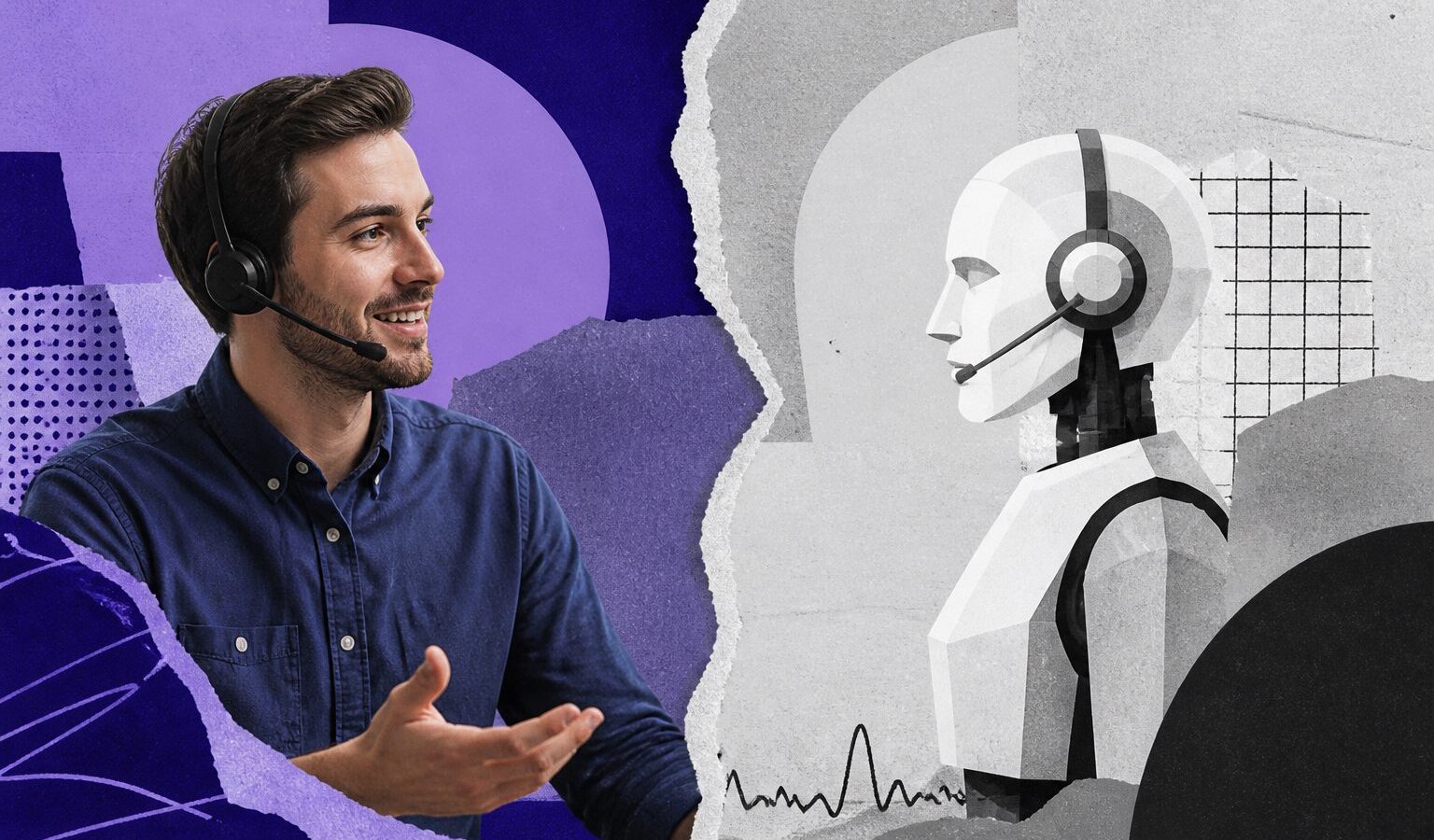
Why AI sales agents don’t sound like your best rep usually comes down to sales judgment. The synthetic voice is what buyers notice first and what vendors fix first. Everything underneath it is what your rep carries into the call: account history, a sense of timing, memory of the objection this buyer raised in March, and the instinct to stop pushing when pushing would cost the deal.
That gap matters for SaaS buyers because a “human-sounding” demo can still fail in production. Prospects judge more than tone. They judge whether the conversation feels informed, relevant, and worth continuing.
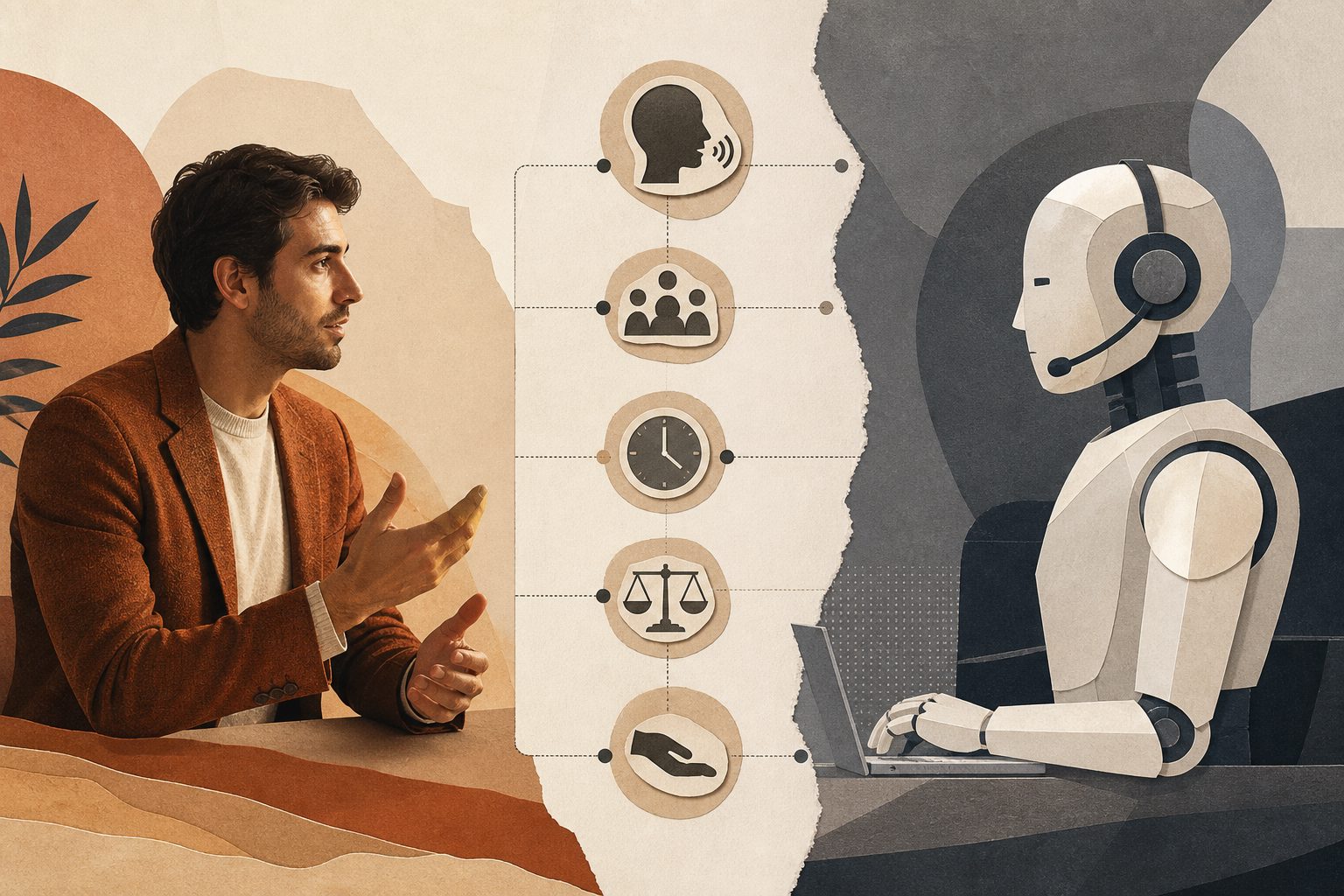
What does “sounding like your best rep” actually mean?
Sounding like your best rep means matching the rep’s commercial behavior — how they listen for urgency, adapt to the buying stage, choose what to leave unsaid, and protect trust when the prospect is not ready. The words are the visible layer of that.
Most AI sales agent evaluations stop at surface quality:
- Does the voice sound natural?
- Does the email avoid obvious spam language?
- Does the agent mention the prospect’s company?
- Can it answer common product questions?
Those checks are useful and incomplete at the same time. What makes your best rep expensive is the ability to compress messy signals into the next move, and a polished script has never done that.
For SaaS buyers comparing platforms, that distinction should shape the whole evaluation. A tool that produces plausible talk but cannot qualify, route, pause, escalate, or learn from a live objection is a script reader with better diction. For a broader buying lens, toppp.ai’s guide to AI sales agents for SaaS buyers is a useful companion.
The five gaps that make AI sales agents feel “off”
Agents feel off when they fail on one of five layers: voice rhythm, context, playbook depth, buyer empathy, or operating authority. Improving one layer rarely repairs the experience, because prospects react to the whole conversation.
| Gap | What prospects notice | What your best rep does differently | What to test |
|---|---|---|---|
| Voice rhythm | Long pauses, abrupt turns, over-polished phrasing | Uses short acknowledgments, interrupts politely, varies pace | Latency, turn-taking, barge-in handling |
| Context | Generic personalization | Connects account signals to business pain | CRM, website, intent, product usage access |
| Playbook depth | Same reply to every objection | Changes path by persona, stage, and risk | Scenario-based objection tests |
| Buyer empathy | Pushes after disinterest | Knows when to slow down or stop | Quit rules and escalation rules |
| Operating authority | “Let me check” loops | Books, routes, updates, and follows up | End-to-end workflow execution |
Use the table as a diagnostic. An agent that fails a single row can still pass a demo. Fail three and the buyer feels it inside the first call.
Voice quality is only the first layer of the problem
Voice quality matters, and it runs out fast. A natural voice still feels wrong when the agent answers late, misses an emotional cue, or delivers a perfectly formed answer to the wrong question.
On live calls, three voice issues do most of the damage:
- Latency: a two-second pause after every prospect turn reads as processing time, and prospects hear it that way.
- Turn-taking: the agent waits too long, talks over the prospect, or never recovers after an interruption.
- Prosody mismatch: the tone stays cheerful while the buyer signals confusion, skepticism, or urgency.
All three are measurable. During a pilot, pull the call recordings and tag every moment where a human would have dropped in a quick “got it,” “fair,” or “before I answer that…” bridge. That count tells you more than a subjective “sounds human” score.
Speech is the interface. The intelligence sits behind it, and a better voice only makes weak sales reasoning easier to hear.
The context gap: your best rep knows what the AI was never given
The context gap is the most common reason AI SDRs and automated sales agents sound generic. They speak from a prompt. Your best rep speaks from account history, buyer role, product nuance, and the objection that killed a similar deal last quarter.
A best rep might know that:
- the account previously churned from a competitor;
- the buyer is technical but the economic buyer is not;
- the prospect downloaded a security checklist before asking for pricing;
- the company just hired RevOps leadership;
- support tickets make one feature risky to oversell.
An agent without any of that will still “personalize” — industry, headcount, a recent funding round. It reads thin because none of it changes the sales motion.
Research on LLM personalization supports the caution. A 2026 paper introducing SDR-Bench found a personalization plateau across the models it tested, and in a field deployment with sales professionals, 48% of the model-generated content was rated immediately useful (arXiv: Benchmarking the Personalization Capabilities of Large Language Models). Useful, and a long way from rep-ready.
Which suggests the question to put to a vendor: does better context change what the agent decides to do? Personalized copy is table stakes and proves very little on its own.
The playbook gap: choosing between scripts is the job
A sales playbook is a decision system. It tells a rep what to do when buyer signals conflict, and that is the part AI sales agents skip — they retrieve talking points and then have no way to choose among them.
Take the most ordinary case. A prospect asks, “Can you send pricing?” A weak agent sends a pricing link. A strong rep first works out what the question means.
It could mean:
- “I have budget and need a range.”
- “I am comparing vendors.”
- “I am trying to end this conversation.”
- “My boss will not join until there is a number.”
- “I do not understand the packaging.”
Each reading calls for a different move. Good reps answer without losing control of qualification: “Yes, and so I send the right range, are you evaluating for one team or company-wide?”
This is where sales playbook automation software earns its keep. The system has to encode the branching. Storing approved messaging is the easy half.
The “too helpful” problem: AI often fails to know when to stop
Your best rep spends the hour where it converts. AI agents often sound wrong because they keep being helpful long after the buyer has signaled low intent.
Many teams train agents to answer every question, overcome every objection, and keep the conversation alive. In real sales, persistence has a price. An hour spent on the wrong conversation is an hour the better-fit buyer spent waiting.
Academic research on outbound sales puts a number on it. Applied to calls from a large European telecommunications firm, a stopping agent reduced the time spent on failed calls by 54% while preserving nearly all sales; reallocating the time saved increased expected sales by up to 37% (Learning When to Quit in Sales Conversations).
Few SaaS teams need an autonomous “quit agent” of their own. Every evaluation should still include the negative signals: can the agent disqualify, pause, hand off, or stop a follow-up sequence on its own? A rep-like agent needs a no-more-pressure mode.
Scoring the gap: the Rep-Likeness Gap Audit
The Rep-Likeness Gap Audit scores whether an AI sales agent behaves like your best rep, using observable production behavior rather than vendor claims or demo polish. Score each category from 1 to 5 after reviewing at least 25 real or simulated conversations.
| Category | 1 point | 3 points | 5 points |
|---|---|---|---|
| Conversation rhythm | Long pauses and rigid turns | Mostly natural, occasional lag | Fast, interruptible, context-aware pacing |
| Account context | Uses only name/company | Uses firmographic and CRM data | Connects signals to likely business pain |
| Objection handling | Repeats approved answers | Handles common objections | Adapts by persona, stage, and prior history |
| Qualification judgment | Collects fields | Scores fit and urgency | Changes route based on risk and intent |
| Escalation | Escalates only on keywords | Escalates on defined triggers | Escalates with summary, evidence, and next step |
| Compliance and trust | Vague identity | Discloses when required | Clear identity, consent, opt-out, and audit trail |
| Workflow completion | Drafts recommendations | Completes some tasks | Updates CRM, books meetings, routes, and follows up |
Seven categories, 35 points available. At 21 or below, the agent belongs in a drafting role that a human reviews before anything goes out. From 22 to 29, it can carry narrow inbound qualification or after-hours response. At 30 or above, run a controlled production pilot with explicit guardrails.
The audit replaces “Does it sound human?” with a question you can act on: where does the agent stop behaving like our best rep, and is that gap acceptable for this sales motion?
A mini case: the demo agent that failed on pricing intent
Here is a pilot pattern that repeats across SaaS teams. The agent handles demo requests well in scripted tests, then loses ground the moment prospects ask about pricing early. The answer it gives is usually correct. It just never diagnoses intent.
Walk through how a human handles the same question:
- gives a credible range;
- asks whether the buyer is evaluating for one team or a business unit;
- routes enterprise-size accounts to a senior AE before sending detailed packaging.
The agent sends the same pricing explanation to everyone. Small accounts get enterprise language they cannot use. Larger accounts go under-qualified. Procurement-led buyers get a friendly answer and no question about their buying process.
The fix is rarely a better prompt like “sound more consultative.” It is a pricing-intent branch:
- If the account looks small, give the range and invite self-serve or light discovery.
- If the account matches enterprise signals, answer briefly and trigger the AE handoff.
- If the buyer asks for budget approval language, provide a business-case summary.
- If the buyer asks pricing after resisting discovery, mark it as possible low intent.
That is the line between conversational automation and sales conversation automation. The agent had the charm already. What it lacked was a decision tree.
Compliance can make the agent sound less human — and more trustworthy
An AI sales agent should not always aim to be indistinguishable from a person. In regulated outreach, trust runs through clear identification, consent handling, and a working opt-out.
For U.S. calling, the FCC has stated that AI-generated voices count as artificial voices under the TCPA, which pulls them into robocall consent obligations (FCC announcement on AI-generated voices in robocalls). The FTC’s telemarketing guidance covers required disclosures and the limits on misrepresentation during sales calls (FTC Telemarketing Sales Rule guidance).
None of that is legal advice, but all of it is a buying requirement. If a vendor’s demo depends on hiding that the agent is AI, treat it as a risk signal: that is a product decision showing through.
Transparent, useful, fast, easy to escalate. That is the implementation that holds up.
How to make AI sales agents sound more like your best rep
Close the gap by improving the system around the agent before rewriting phrasing. Better prompts help at the margin. Rep-like performance comes from context, playbooks, workflow authority, and feedback loops.
Work in this order:
- Capture your best rep’s decision moments. Review 20–30 strong calls and mark every point where the rep changed direction.
- Separate talk tracks from rules. A talk track says what to say. A rule says when.
- Connect live context. CRM history, product usage, firmographic data, support risk, intent signals — wire in what the rep would have checked before dialing.
- Design escalation triggers. Write down when the agent must hand off, stop, or wait for human review.
- Test the ugly scenarios. Interruptions, vague pricing questions, hostile objections, bad-fit accounts, and a buying committee that disagrees with itself.
- Measure rep-likeness by outcomes. Qualified meetings, handoff quality, no-show rate, opt-outs, and how often a human has to correct the agent.
For SaaS teams building a broader automation stack, toppp.ai’s guide to automated sales conversation software covers the systems layer behind these capabilities.
When should SaaS buyers use AI agents anyway?
AI sales agents are strongest when the task is frequent, bounded, and time-sensitive. They are weakest when the deal turns on political navigation, trust repair, complex procurement, or high-stakes persuasion.
Good-fit use cases include:
- inbound speed-to-lead;
- after-hours qualification;
- demo request triage;
- meeting reminders and rescheduling;
- long-tail outbound follow-up;
- routing based on fit, urgency, and account tier;
- knowledge capture from rep conversations.
Poor-fit use cases include:
- replacing senior enterprise AEs;
- negotiating complex contracts;
- handling sensitive churn-risk accounts;
- selling into unclear buying committees;
- leading late-stage consensus building.
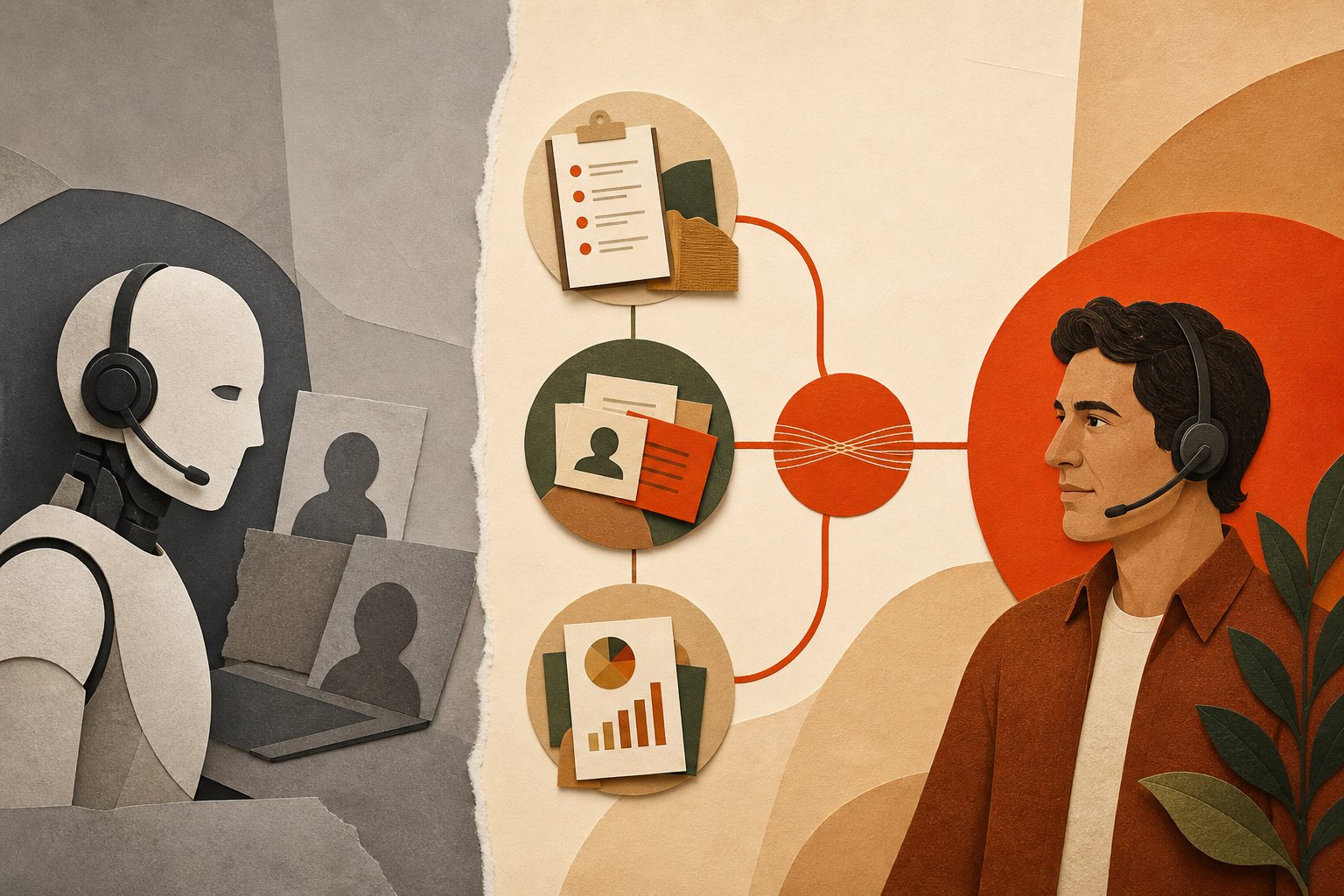
Most teams land on a hybrid. AI takes speed, coverage, data gathering, and first-pass routing; humans take the judgment-heavy moments where trust, risk, and internal politics decide the deal. For comparison planning, see toppp.ai’s guide to automated sales reps and its framework for B2B sales qualification automation.
Frequently asked questions
Why do AI sales agents sound robotic even with a good voice?
Because the conversation logic underneath is shallow. The voice can be excellent while the agent still pauses oddly, misses context, reaches for generic empathy, or answers a question the buyer did not ask.
Can an AI sales agent be trained on our best rep’s calls?
Yes, and the value sits in the decision patterns rather than the phrasing. Pull out objection branches, qualification cues, escalation moments, and the calls where the rep chose to stop pushing.
Should AI sales agents disclose that they are AI?
For many outbound calling scenarios, disclosure and consent rules apply, and the requirements vary by jurisdiction and channel. Involve legal counsel, and choose vendors with clear identity, consent, opt-out, and audit controls.
What is the fastest way to improve an AI SDR?
Fix the account context before rewriting copy. Give the agent CRM history, buying signals, routing rules, and disqualification criteria. “Make it warmer” prompts rarely repair a weak sales motion.
Will AI sales agents replace top SaaS reps?
Not in complex sales motions. AI expands coverage and absorbs repetitive work; top reps still win the deals where trust, timing, internal politics, and judgment decide the outcome.
The real answer: your best rep is a decision system
Your best rep is a decision system built out of market context, buyer psychology, product nuance, and years of pattern recognition. The voice, the script, and the email style are its output.
A buyer-ready AI sales agent needs the same ingredients in machine-operable form:
- clean context;
- encoded playbooks;
- low-latency conversation handling;
- clear stop and escalation rules;
- workflow authority;
- compliance guardrails;
- continuous review against real outcomes.
Prospects do not need to believe the agent is human. They need to feel understood, get routed correctly, and never end up trapped in a low-judgment conversation.
Keep reading

SaaS Vendor Source Code Escrow Clause: Buyer Negotiation Guide
A SaaS vendor source code escrow clause should cover code, cloud deployment, data export, testing, and release triggers. Use this buyer checklist to negotiate continuity protection.

SaaS Contract Breach Cure Period Standard: Buyer Benchmarks and Clause Terms
Learn the SaaS contract breach cure period standard, including 5-, 10-, 15-, and 30-day benchmarks, carve-outs, notice rules, and buyer protections.

SaaS grandfathered pricing policy review: A buyer’s renewal checklist
SaaS grandfathered pricing policy review for buyers: identify hidden repricing triggers, test renewal language, and negotiate defensible price protection.