
Enterprise SaaS Total Cost of Ownership Calculator: A Buyer’s Model

By toppp.ai | Published 2026-10-05 | Updated 2026-10-05
An enterprise SaaS total cost of ownership calculator estimates every material cost incurred from evaluation through exit—not merely the vendor’s subscription quote. A decision-grade model should include implementation, integrations, internal labor, adoption, usage growth, renewal increases, operational risk, contract overlap, and replacement costs.
This guide provides a reusable calculation method, an illustrative three-year case, and a sensitivity framework for comparing enterprise software proposals on equal terms.
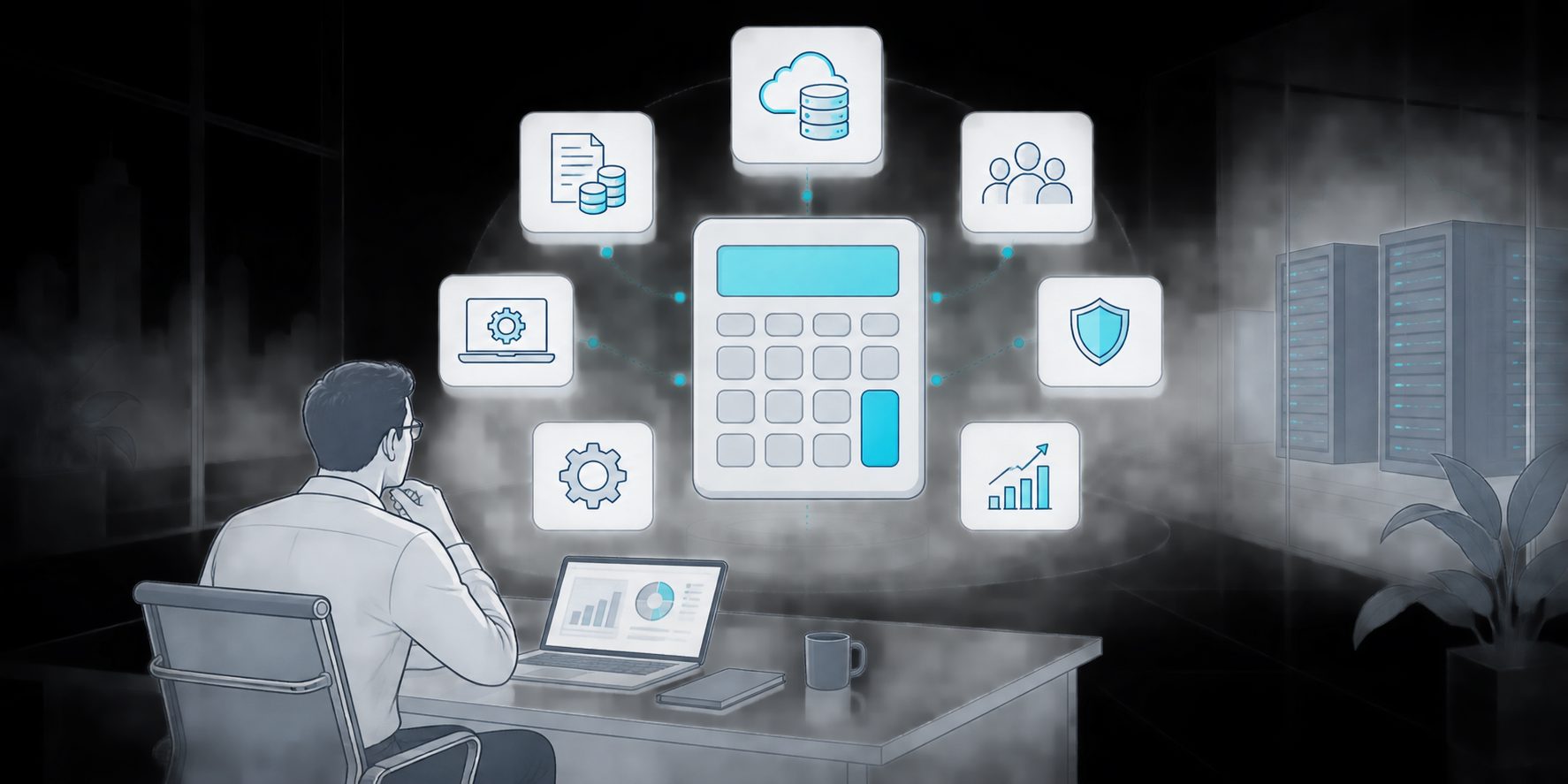
What Should an Enterprise SaaS TCO Calculation Include?
A SaaS TCO calculation should capture cash payments, internal resource consumption, risk-adjusted losses, and end-of-contract costs over a consistent evaluation period. Three years is often practical for software procurement because it exposes renewal compounding without relying on distant assumptions.
Use these six cost groups:
| Cost group | Inputs to capture |
|---|---|
| Subscription | Base fee, seats, usage, modules, minimum commitments, overages, annual uplift |
| Deployment | Configuration, implementation partner, data cleansing, migration, testing |
| Operations | Administration, support, integration maintenance, reporting, compliance reviews |
| Adoption | Training, change management, productivity loss, remediation for low usage |
| Commercial risk | Change orders, downtime exposure, unused capacity, contract overlap |
| Exit | Data export, archival access, migration, retraining, parallel operation, termination fees |
Taxes and foreign-exchange effects may also matter for multinational purchases. Record them separately so sourcing teams can distinguish vendor economics from jurisdictional costs.
How Does the Calculator Work?
A useful enterprise SaaS total cost of ownership calculator applies one formula consistently to every shortlisted vendor:
TCO = Subscription + Deployment + Operations + Adoption + Expected Risk + Exit Costs − Credits
Calculate subscription costs year by year:
Subscription in year n = Year-one price × (1 + renewal uplift)^(n−1) × growth factor
Expected risk converts uncertain events into comparable planning values:
Expected risk cost = Probability of event × Estimated financial impact
For example, a 25% probability of an $80,000 adoption-remediation project adds $20,000 to risk-adjusted TCO. This does not predict that the event will occur; it prevents a risky proposal from appearing artificially inexpensive.
Use undiscounted TCO for budget planning. When comparing options with different payment schedules, also calculate net present value using the discount rate approved by your finance team.
Which Hidden Costs Are Most Often Missed?
The most frequently omitted costs are internal labor, low utilization, integration maintenance, incumbent contract overlap, and data extraction at exit. These costs rarely appear in the vendor order form, but the buyer still funds them.
Internal labor should include security review, procurement, legal negotiation, implementation governance, system administration, and recurring access audits. Multiply estimated hours by a fully loaded hourly rate rather than salary alone.
Utilization requires separate treatment. A 600-seat agreement with 72% active use still incurs the full contract cost. Report both contracted-seat cost and cost per active user:
Cost per active user per month = TCO ÷ average active users ÷ contract months
Contract terms can also create lifecycle costs. Buyers should examine renewal price increase caps and maintain an auto-renewal opt-out calendar before treating projected renewal pricing as reliable.
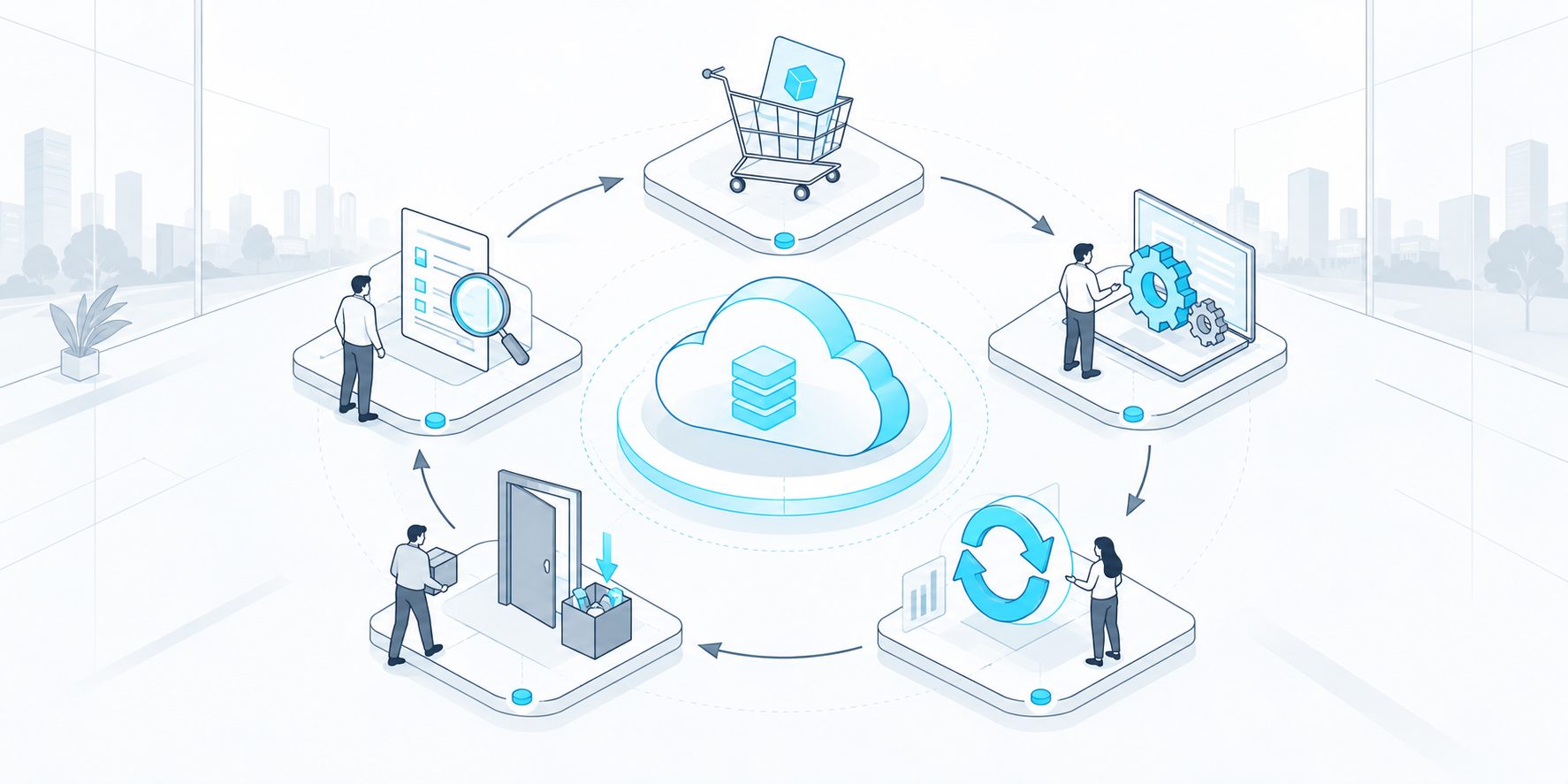
Worked Example: A Three-Year Enterprise SaaS Purchase
Consider an illustrative 600-seat platform quoted at $240,000 for year one. The buyer expects a 6% annual uplift and 72% average active-seat utilization.
| Three-year input | Cost |
|---|---|
| Subscription with annual uplift | $764,064 |
| Implementation and configuration | $120,000 |
| Data migration and cleansing | $45,000 |
| Integration development | $80,000 |
| Training and change management | $35,000 |
| Internal administration | $168,000 |
| Integration maintenance | $48,000 |
| Security and legal review | $25,000 |
| Three-month incumbent overlap | $54,000 |
| Exit and data portability | $70,000 |
| Risk-adjusted downtime exposure | $24,000 |
| Risk-adjusted adoption remediation | $20,000 |
| Three-year TCO | $1,453,064 |
The uncapped comparison—year-one subscription multiplied by three—would be $720,000. The lifecycle model produces a 2.02× TCO multiple and an effective cost of approximately $93 per active user per month, compared with the quoted $33 per contracted seat per month.
This is an original scenario model, not a market benchmark. Its purpose is to show how assumptions change a buying decision.
How Should Buyers Stress-Test the Result?
A single forecast creates false precision. TCO should be tested across multiple scenarios to reveal which assumptions can overturn the preferred vendor ranking.
For the worked example, we modeled 12 combinations using:
- Renewal uplift of 3%, 6%, or 10%
- Active utilization of 55% or 85%
- Implementation and integration overruns of 0% or 30%
The resulting three-year TCO ranged from approximately $1.43 million to $1.54 million. However, effective cost per active user varied much more—from about $78 to $130 per month. This shows why utilization may be a stronger decision variable than a modest subscription discount.
Label each input as contracted, validated, or estimated. Require an owner and supporting evidence for every high-impact assumption. This “confidence layer” distinguishes negotiated facts from optimistic forecasts—something a basic calculator total cannot reveal.
How Can TCO Improve Vendor Negotiation?
TCO turns hidden expenses into negotiable commercial requirements. Buyers can ask vendors to cap, remove, or share specific lifecycle costs instead of negotiating only the subscription discount.
Useful negotiation levers include:
- Cap annual uplifts for the initial term and renewal periods.
- Tie implementation payments to acceptance milestones.
- Include migration, sandbox, training, and premium support credits.
- Define overage rates before consumption begins.
- Obtain data exports in usable formats without additional fees.
- Add ramp periods for seats that will not be active at launch.
- Secure termination assistance and transition obligations.
Document the final assumptions in a software procurement business case. Contract language should then be checked against the model using a SaaS master services agreement clause checklist.
What Outputs Should a Decision-Grade Calculator Show?
A decision-grade calculator should provide more than one total. It should expose cost timing, uncertainty, utilization, and the assumptions responsible for differences between vendors.
At minimum, report:
- Total lifecycle cost and cost by year
- TCO multiple versus the initial quote
- Cost per contracted and active user
- One-time versus recurring costs
- Cash payments versus internal labor
- Base, low, and high scenarios
- Top five cost drivers
- Contracted versus estimated inputs
- Exit cost and incumbent overlap
- Break-even point between alternatives
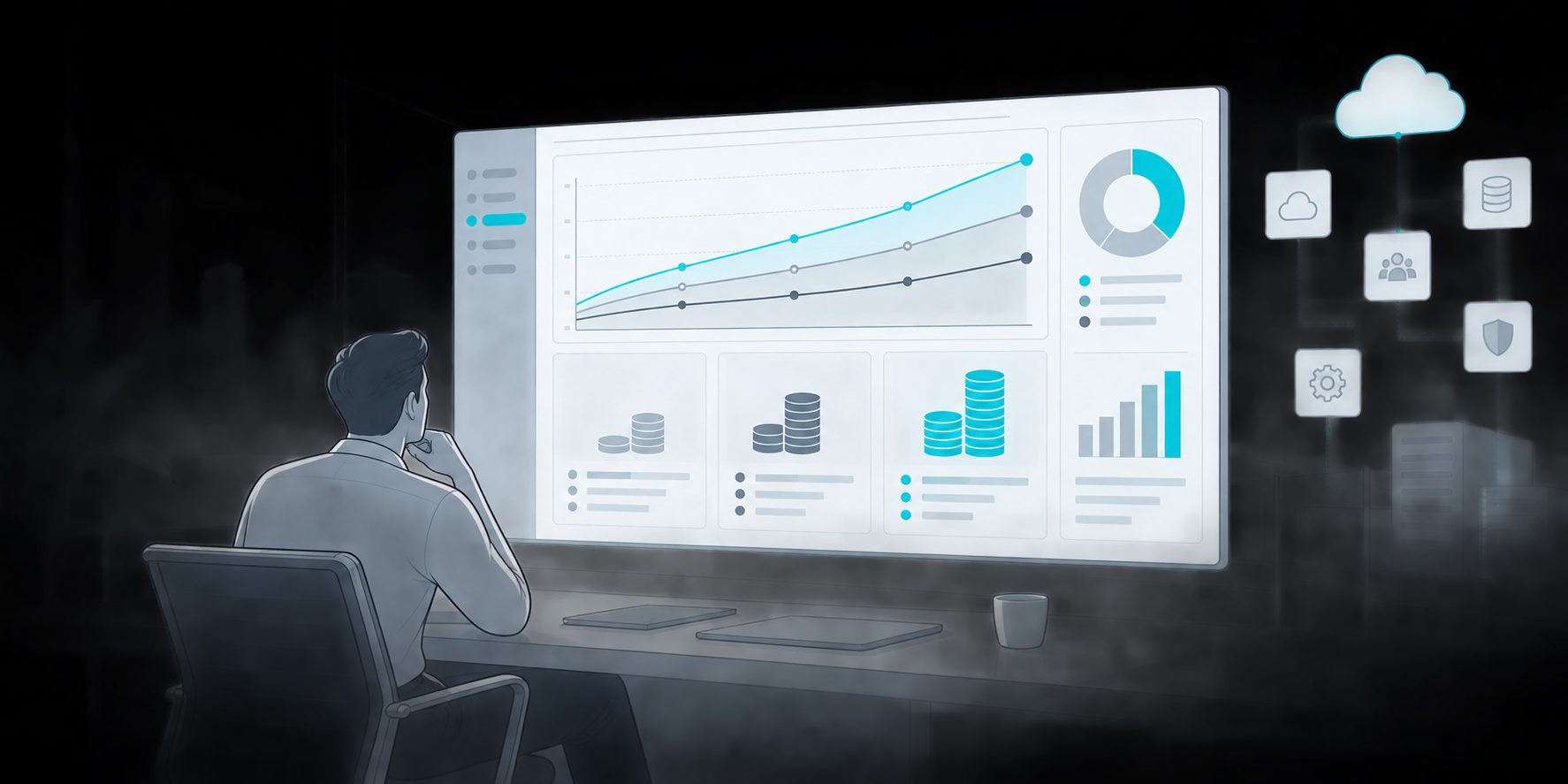
These outputs help procurement, finance, IT, security, and business owners review the same economic model rather than maintaining incompatible spreadsheets.
Frequently Asked Questions
What is the best period for calculating SaaS TCO?
Three years works well for many enterprise evaluations because it captures deployment, recurring operations, and renewal compounding. Use five years for deeply embedded systems when assumptions remain credible.
Should ROI be included in TCO?
No. TCO measures costs, while ROI compares benefits with costs. Calculate TCO first, then use it as the cost denominator in the business case.
Are unused licenses part of total cost of ownership?
Yes. Paid but inactive capacity remains a real cost. Model the full payment in TCO and use active-user cost to expose utilization inefficiency.
Can an enterprise SaaS total cost of ownership calculator compare usage-based pricing?
Yes. Replace fixed seat growth with expected consumption by year, then model minimum commitments, tier thresholds, overage rates, and low/base/high usage scenarios.
Final Buying Rule
Use the enterprise SaaS total cost of ownership calculator as a shared commercial model, not a one-time finance exercise. Reconcile it with the final order form, implementation statement of work, security requirements, and renewal terms before approval. The winning proposal should have the best risk-adjusted lifecycle economics—not merely the lowest first-year quote.
Keep reading

Red Flags in SaaS Vendor Agreements: A Buyer’s Review Checklist
Spot red flags in SaaS vendor agreements before signing, from renewal traps and price increases to data rights, liability gaps, and exit costs.

SaaS MSA Negotiation Checklist for Buyers
Use this SaaS MSA negotiation checklist for buyers to review pricing, data, SLAs, liability, indemnity, renewal, and exit terms before signing.

SaaS vendor IP indemnification scope checklist: Buyer review guide
Use this SaaS vendor IP indemnification scope checklist to test covered claims, exclusions, defense rights, remedies, caps, and third-party risk before signing.