
AI Powered Sales Agents: A SaaS Buyer’s Evaluation Framework
AI powered sales agents are software systems that can interpret buyer intent, take sales actions, and hand off qualified opportunities with less human effort. For SaaS buyers, the question worth asking is: which agent safely improves our sales motion without creating messy data, bad buyer experiences, or governance risk?
Most comparison lists focus on vendors. That helps with discovery, but it rarely answers the buying question: where should an AI sales agent sit in your revenue process, and how should you measure whether it is worth expanding?
This guide gives SaaS teams a practical evaluation model: use-case fit, control design, data readiness, risk, and ROI.
What are AI powered sales agents?
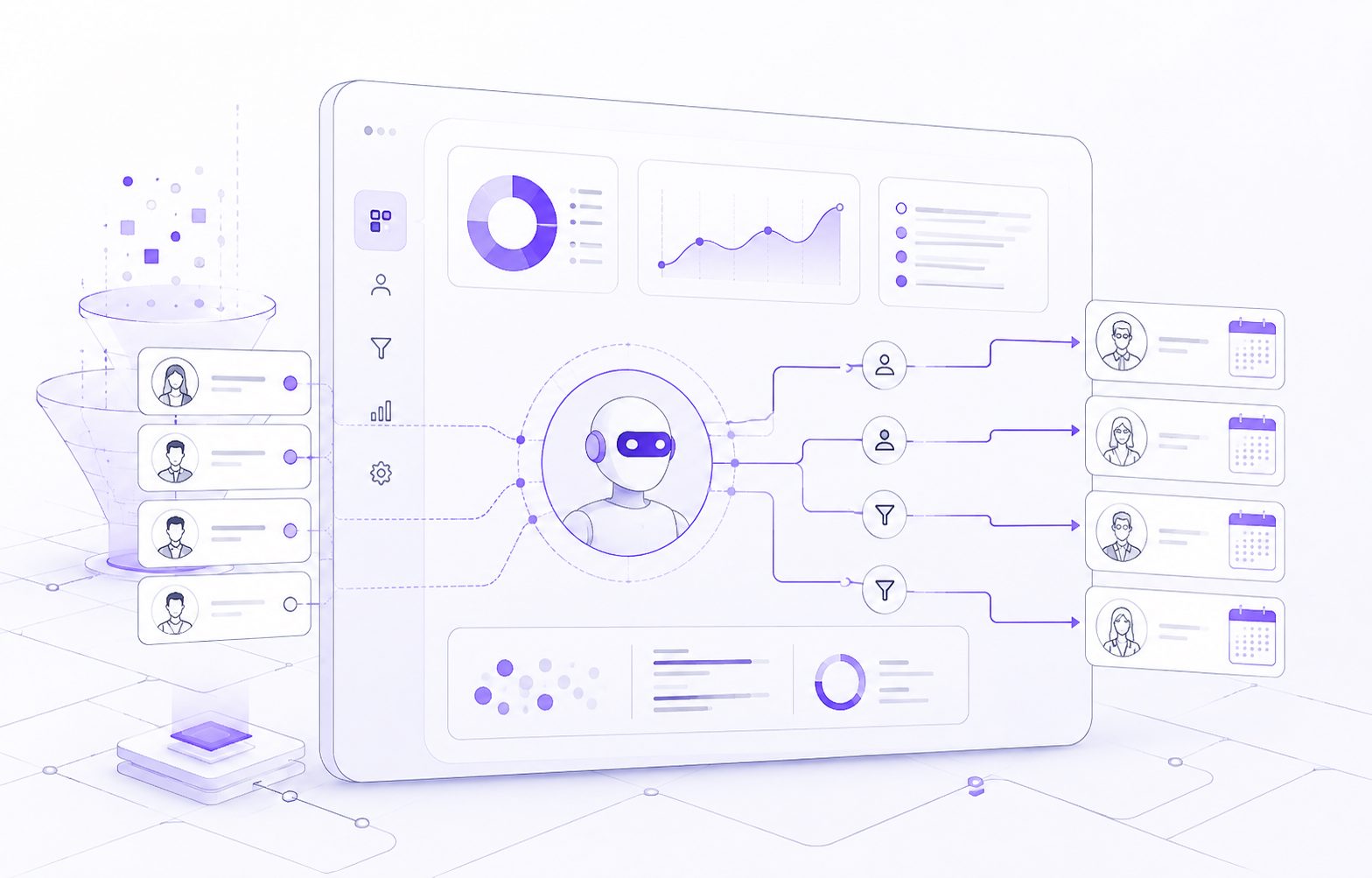
AI powered sales agents are autonomous or semi-autonomous tools that perform sales tasks such as prospect research, inbound qualification, personalized follow-up, meeting booking, CRM updates, and next-step recommendations. Unlike basic automation, they can use context to decide what action to take next.
A traditional sales automation rule might say: “If a lead fills out a demo form, send email A.” An AI sales agent can evaluate firmographic data, conversation history, page visits, stated pain points, and rep capacity before deciding whether to ask a qualification question, book a meeting, enrich the account, or route the lead to sales.
Salesforce describes AI sales agents as systems that analyze CRM and business data to perform sales-related tasks autonomously. Industry research suggests that seller interest in AI agents is particularly high among top performers. Those signals matter, but buyers should avoid treating “agentic” as a category label. The useful question is whether the tool can reliably execute a specific revenue job.
The four sales jobs where AI agents usually create value first
The best first deployment is usually not full sales replacement. It is a narrow, measurable workflow where speed, consistency, and context improve conversion.
For SaaS teams, four jobs tend to be the strongest starting points:
| Sales job | Best-fit motion | What the agent does | Human role |
|---|---|---|---|
| Inbound qualification | High demo volume, PLG, freemium, paid media | Asks fit questions, scores urgency, routes leads | Handles high-value demos |
| Speed-to-lead follow-up | Competitive categories, form-fill demand | Responds instantly, books meetings, revives stale leads | Reviews exceptions |
| Account research | Enterprise or mid-market outbound | Summarizes company, role, trigger, likely pains | Approves messaging |
| CRM hygiene and next steps | Rep-heavy teams with data gaps | Logs notes, updates fields, suggests actions | Validates pipeline quality |
A full autonomous SDR sounds attractive, but most SaaS teams get better early results by starting with one controlled job. If qualification is your bottleneck, compare tools using a B2B sales qualification automation framework. If the larger question is category fit, start with a broader AI sales agents buyer comparison.
A buyer-control framework for choosing the right agent
The strongest AI sales agent is not always the most autonomous one. The right agent gives your team the highest useful automation with the lowest unacceptable downside.
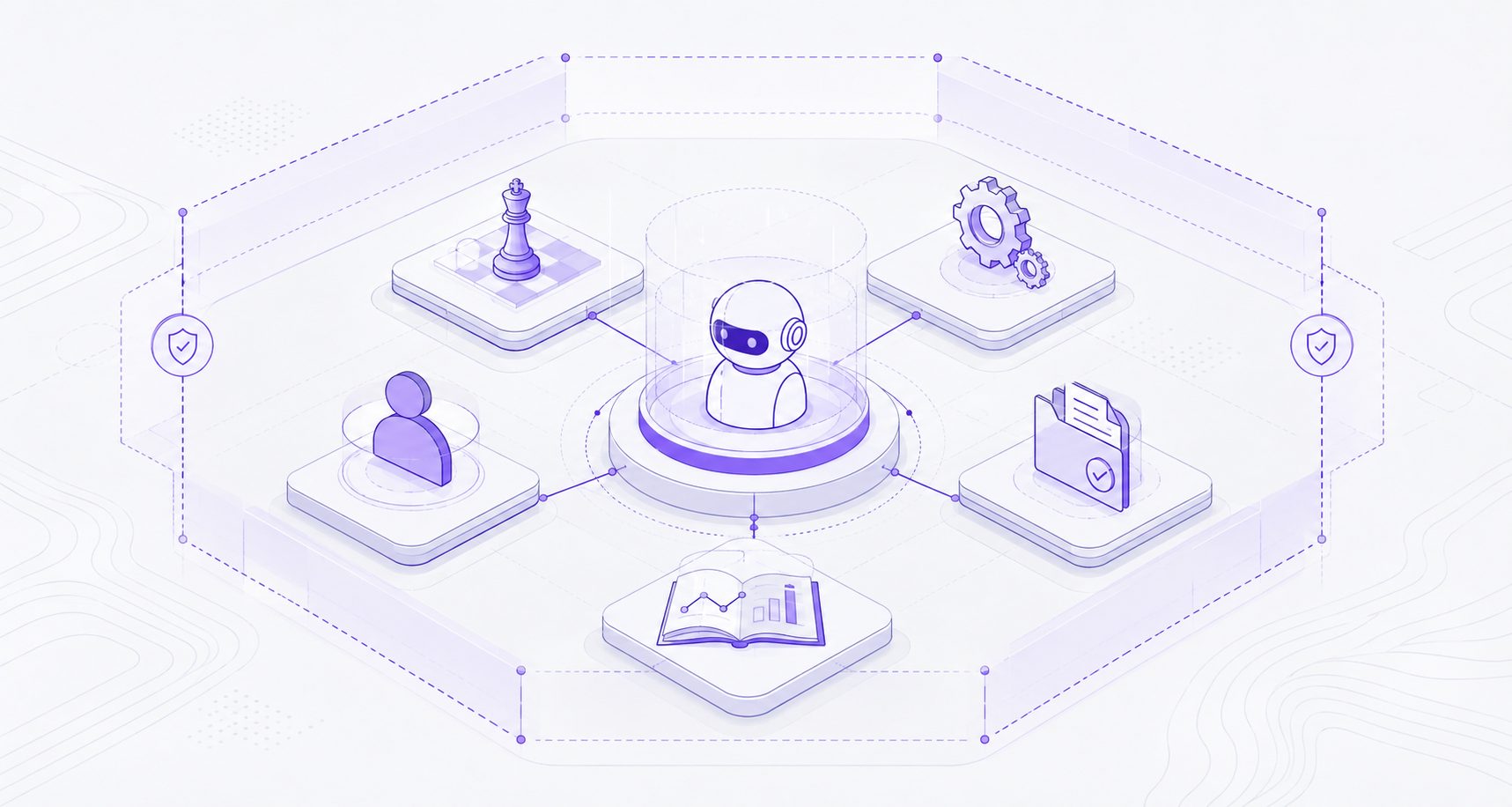
Use this five-part control framework before shortlisting vendors:
- Decision boundary: What can the agent decide alone?
- Action boundary: What systems can it change, message, or trigger?
- Escalation boundary: When must a human take over?
- Evidence boundary: What source data must support each action?
- Learning boundary: Who approves changes to scripts, scoring, and routing?
This is the main gap in many vendor comparisons. A tool may look excellent in a demo because it completes a polished workflow. In production, the harder question is how it behaves when the buyer gives partial information, contradicts CRM data, asks a pricing edge case, or should not be contacted again.
An AI SDR that can book meetings should not necessarily be allowed to disqualify enterprise accounts, change opportunity stages, or promise custom pricing. Those actions need tighter review.
How to compare AI sales agents by sales motion
Different sales motions need different agent capabilities. A vendor built for high-volume inbound chat may not fit strategic outbound, and a CRM-native assistant may not be enough for 24/7 buyer conversations.
Inbound-led SaaS
Inbound teams should prioritize response speed, routing accuracy, calendar handoff, qualification logic, and CRM writeback. The agent must understand form data, website behavior, campaign source, and account fit.
A good pilot metric is not only meetings booked. Track qualified meetings booked within five minutes, because speed without fit can flood account executives with low-quality calls.
Outbound-led SaaS
Outbound teams need research quality, message relevance, deliverability controls, account prioritization, and human approval. Be cautious with agents that over-automate cold outreach without clear suppression rules.
For this motion, the agent should draft and recommend before it sends at scale. Human review remains important for named accounts, regulated verticals, and executive personas.
Enterprise SaaS
Enterprise teams should evaluate permissions, audit logs, data residency, CRM dependency, role-based access, security review readiness, and integration depth. The buying committee may include RevOps, sales leadership, IT, security, legal, and finance.
A more detailed enterprise checklist is useful when governance matters more than speed. See this enterprise AI sales agent guide for fit, governance, and ROI considerations.
Product-led growth
PLG teams should use AI agents to convert product signals into sales actions. Examples include expansion intent, repeated feature usage, invited teammates, pricing-page visits, or failed onboarding steps.
The agent should connect product usage to the next best sales or customer success action.
The SaaS buyer scorecard: 100 points before procurement
A simple scorecard prevents teams from buying the best demo instead of the best operational fit. Score each vendor before pricing negotiation.
| Category | Weight | What to inspect |
|---|---|---|
| Use-case fit | 20 | Matches inbound, outbound, enterprise, PLG, or hybrid motion |
| Data readiness | 15 | Works with CRM, enrichment, product, email, calendar, and conversation data |
| Control and governance | 20 | Permissions, approvals, audit logs, escalation, suppression rules |
| Buyer experience | 15 | Natural conversation, accurate answers, smooth handoff, no spammy behavior |
| Revenue impact | 15 | Qualified meetings, conversion lift, cycle-time reduction, rep capacity |
| Implementation load | 10 | Setup time, RevOps burden, admin complexity, change management |
| Vendor durability | 5 | Roadmap, support, security posture, category focus |
A vendor scoring 82 with strong governance may be safer than a vendor scoring 90 on features but weak on permissions. This tradeoff matters most when the agent can contact prospects, alter CRM data, or influence pipeline reporting.
What ROI should SaaS buyers expect?
ROI from AI powered sales agents should be measured by revenue-process impact, not task volume. The best metrics connect agent activity to pipeline quality, conversion speed, rep productivity, and customer experience.
Use this baseline model:
Monthly value = incremental qualified opportunities + recovered rep hours + faster response impact – software, implementation, and monitoring cost.
Track these before and after the pilot:
- Median time to first qualified response
- Percentage of leads successfully qualified
- Meeting-booking rate by lead source
- Show rate and opportunity conversion rate
- AE-reported meeting quality
- CRM completeness for agent-handled records
- Human override rate
- Incorrect answer or bad-action rate
McKinsey research shows that AI agents can redirect time from routine work to higher-value selling activity, with salespeople spending 30-50% more time on negotiation, relationship building, and strategy. SaaS buyers should validate this locally. A 20% reduction in admin work is only valuable if the recovered time becomes selling time, coaching time, or better account coverage.
For a deeper ROI model, compare assumptions against an AI sales agents ROI evaluation framework.
Pilot design: how to test without risking pipeline quality
A good pilot should prove operational fit in 30 to 45 days. Do not begin with full autonomy across every segment.
Use a staged pilot:
- Select one workflow. Start with inbound demo qualification, abandoned demo follow-up, meeting reminders, or CRM note capture.
- Create a control group. Compare agent-handled leads with human-only or legacy-automation leads.
- Set disallowed actions. Block pricing promises, legal claims, discounting, competitor claims, and unsupervised disqualification.
- Define human takeover rules. Trigger handoff for enterprise accounts, angry buyers, security questions, procurement language, or unclear intent.
- Review conversations weekly. Inspect not only conversion metrics but also tone, accuracy, and buyer friction.
- Expand only after threshold performance. Increase autonomy when accuracy, escalation, and conversion remain stable.
A vendor should be able to support this kind of controlled rollout. If the only proof offered is a generic demo or a broad productivity claim, the buyer still carries most of the risk.
Common mistakes when buying AI sales agents
The biggest mistake is buying autonomy before defining the sales process. AI agents amplify process quality. They do not fix unclear qualification criteria, messy CRM stages, weak routing rules, or inconsistent messaging.
Other common mistakes include:
- Treating every “AI SDR” as the same category
- Measuring booked meetings without measuring meeting quality
- Letting the agent overwrite CRM fields without auditability
- Ignoring opt-out, suppression, and consent workflows
- Using generic prompts instead of approved sales playbooks
- Skipping security review because the pilot feels small
- Failing to train reps on when to trust or override the agent
Sales playbook structure matters. A tool with clear guardrails can perform better than a more powerful tool connected to unclear instructions. If your team lacks consistent messaging, evaluate sales playbook automation software before expanding agent autonomy.
Which type of AI sales agent should you shortlist?
Shortlist based on the workflow you need to improve first, not on the broadest feature list.
| If your main bottleneck is… | Shortlist this type |
|---|---|
| Slow inbound response | Conversational inbound AI agent |
| Poor lead qualification | Qualification and routing agent |
| Low outbound relevance | Research and personalization agent |
| Rep admin overload | CRM update and sales assistant agent |
| Complex enterprise governance | CRM-native or enterprise-controlled agent |
| 24/7 buyer engagement | Autonomous website or voice sales agent |
Buyers comparing multiple vendors can use a market map such as best AI sales agents in 2026 as a starting point, then apply the scorecard above to avoid over-indexing on category hype.
Frequently asked questions
Are AI sales agents replacing SDRs?
AI sales agents are more likely to replace narrow SDR tasks than entire SDR roles. They can handle research, first response, qualification, follow-up, and CRM updates, while humans remain important for complex discovery, negotiation, relationship-building, and strategic accounts.
What data does an AI sales agent need?
At minimum, it needs clean CRM records, lead source, account attributes, calendar access, approved messaging, qualification criteria, and escalation rules. More advanced deployments may connect product usage, call transcripts, enrichment data, intent signals, and support history.
How long does implementation take?
Simple pilots can start in a few weeks if CRM data, routing rules, and playbooks are ready. Enterprise deployments often take longer because security review, permission design, integrations, and change management matter more.
What is the safest first use case?
The safest first use case is usually assisted inbound qualification or CRM note capture. Both create measurable value while limiting the risk of unsupervised claims, aggressive outreach, or incorrect pipeline changes.
How should SaaS buyers compare vendors?
Compare vendors by sales motion, data requirements, governance, buyer experience, implementation effort, and ROI. Do not rely only on feature checklists. Ask for a pilot that proves performance against your actual lead sources and sales rules.
Bottom line
AI powered sales agents are worth evaluating when a SaaS team has a clear repeatable workflow, reliable data, and a measurable bottleneck. They are risky when buyers expect a generic agent to repair an undefined sales process.
The best purchase decision starts with the workflow, then defines the control layer, then compares vendors. If an agent can improve speed, consistency, and routing without damaging buyer trust, it can become a durable part of the revenue stack.
Keep reading

Red Flags in SaaS Vendor Agreements: A Buyer’s Review Checklist
Spot red flags in SaaS vendor agreements before signing, from renewal traps and price increases to data rights, liability gaps, and exit costs.

SaaS MSA Negotiation Checklist for Buyers
Use this SaaS MSA negotiation checklist for buyers to review pricing, data, SLAs, liability, indemnity, renewal, and exit terms before signing.

SaaS vendor IP indemnification scope checklist: Buyer review guide
Use this SaaS vendor IP indemnification scope checklist to test covered claims, exclusions, defense rights, remedies, caps, and third-party risk before signing.