
SaaS Vendor SOC 2 Bridge Letter Review: Buyer Checklist and Risk Guide

A SaaS vendor SOC 2 bridge letter review determines whether a vendor’s latest SOC 2 report gives you reasonable evidence for the period after the report ended. The letter can help close a documentation gap, but it does not extend the auditor’s opinion or replace a new SOC 2 examination.

What is a SOC 2 bridge letter?
A SOC 2 bridge letter is a management statement covering the period between the end of a completed SOC 2 report and a later date. It typically describes whether material changes occurred in the vendor’s control environment, systems, personnel, incidents, or relevant operations during that gap.
The key distinction is assurance level: a Type 2 SOC 2 report contains an independent auditor’s opinion about controls over a defined examination period, while a bridge letter is generally an unaudited management representation. The AICPA’s SOC 2 guidance describes SOC 2 as an examination of controls relevant to security, availability, processing integrity, confidentiality, or privacy. (aicpa-cima.com)
A bridge letter is therefore continuity evidence, not fresh audit evidence. Treat it as a temporary risk-control document that must be tested against the report, the vendor’s current environment, and your own risk tolerance.
What should a buyer verify first?
Start with document identity and coverage before reading the vendor’s general security claims. A bridge letter is useful only if it clearly connects to the exact SOC 2 report and service your organization is buying.
Check these six fields:
| Review field | What to confirm | Buyer concern |
|---|---|---|
| Report identity | Vendor legal entity, product, system, and CPA firm match | A letter may refer to another subsidiary or platform |
| SOC 2 type | Prefer a Type 2 report for operating-effectiveness evidence | Type 1 addresses design at a point in time |
| Report period | Exact start and end dates | The gap may be longer than assumed |
| Bridge period | Explicit start date and end date | “Since the last report” is too vague |
| Scope | Trust Services Criteria, locations, systems, and subprocessors | Your use case may sit outside scope |
| Signatory | Named vendor officer, date, and letterhead | Anonymous or undated statements weaken accountability |
The report and bridge letter should use matching terminology. If the report covers “Platform A” but the letter refers to the vendor’s entire “technology environment,” ask the vendor to reconcile the difference in writing.
How to review the gap period
The most important question is not whether the letter says “no material changes.” It is whether the vendor’s method for reaching that conclusion is credible.
Ask for a short management summary covering:
-
Infrastructure and architecture changes
New cloud regions, hosting providers, production databases, identity systems, or major integrations can alter the control environment. -
Security and access-control changes
Review changes to privileged access, authentication, encryption, logging, vulnerability management, and employee access procedures. -
Organizational changes
Acquisitions, layoffs, leadership changes, outsourced operations, or changes in security ownership may affect control performance. -
Incidents and investigations
The letter should address whether security incidents, privacy events, availability failures, or reportable control breaches occurred during the gap. -
Subservice organizations
A new infrastructure or data-processing provider may introduce a dependency that the prior SOC 2 report did not cover.
AICPA materials identify security, availability, processing integrity, confidentiality, and privacy as the relevant SOC 2 Trust Services Criteria. (aicpa-cima.com) Your review should map the bridge letter to the specific criteria that matter for your data and business process—not merely accept a generic statement about “security.”
Which bridge letter red flags require escalation?
Escalate the review when the letter is incomplete, overly broad, or inconsistent with other vendor evidence.
High-risk red flags
- The letter has no precise coverage dates.
- It does not identify the underlying SOC 2 report.
- It is signed by an unnamed “authorized representative.”
- It says controls “remained effective” without explaining the basis.
- It excludes incidents, material changes, or exceptions.
- The bridge period is unusually long without a clear audit schedule.
- The vendor refuses to explain a new subprocessor or major platform migration.
- The report contains exceptions, but the bridge letter does not address whether related controls continued.
- The vendor’s security questionnaire contradicts the report or letter.
- The letter appears to be an auditor’s opinion when it is actually management-issued.
A bridge letter should not be rejected automatically because it discloses a change. Disclosure is often better than a sweeping “no changes” statement. The real issue is whether the change affects your risk and whether compensating controls or updated evidence exist.
For a broader assessment, pair the letter with an AI software vendor due diligence framework that connects documentation review to data access, business impact, contract protections, and renewal decisions.
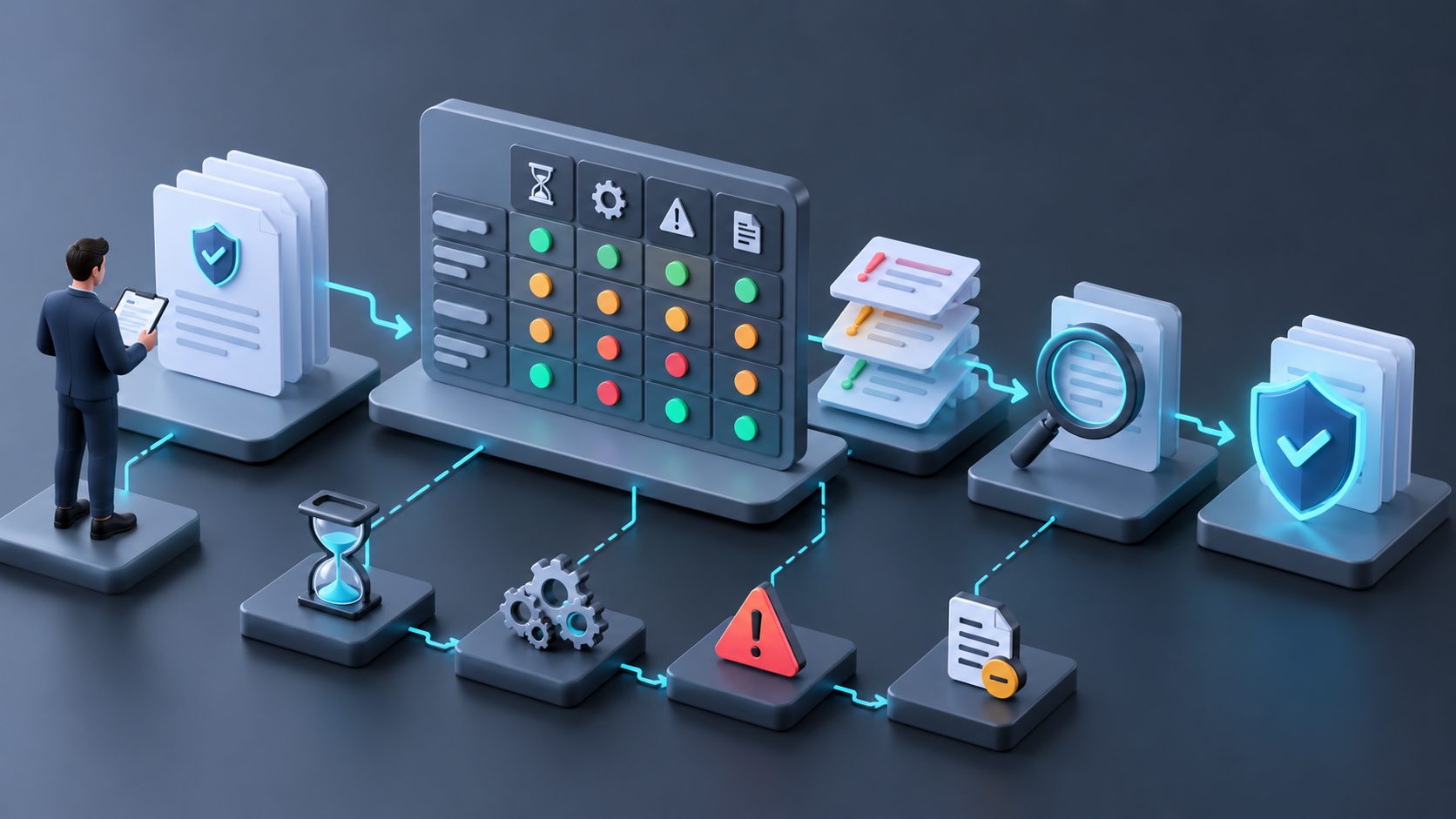
A practical buyer scoring model
A useful way to avoid subjective approvals is to score the bridge letter across four dimensions:
| Dimension | 0 points | 1 point | 2 points |
|---|---|---|---|
| Coverage clarity | Missing dates or report link | Dates present but scope unclear | Exact report and gap dates |
| Change disclosure | Generic statement only | High-level changes listed | Changes mapped to controls and impact |
| Evidence quality | No supporting evidence | Questionnaire or summary provided | Targeted logs, attestations, or updated report |
| Business fit | Critical data or operations with unresolved gap | Moderate exposure | Low exposure or strong contractual controls |
Interpret the total as follows:
- 0–3 points: Do not approve without compensating evidence or formal risk acceptance.
- 4–6 points: Conditional approval with documented follow-up and an expiration date.
- 7–8 points: Generally acceptable for routine procurement, subject to policy and material exceptions.
This is a buyer-side decision aid, not an audit standard. The scoring is intentionally weighted toward coverage and change disclosure because a polished letter with weak scope alignment can create more false confidence than a plainly written letter that identifies a real change.
What evidence should you request?
Request evidence proportionate to the vendor’s risk tier. For a vendor processing sensitive personal data, financial information, credentials, or business-critical workflows, ask for more than the letter itself.
Useful follow-up evidence may include:
- The current SOC 2 report or expected issuance month for the next report.
- A list of material control or infrastructure changes.
- Security incident and privacy-event confirmation for the bridge period.
- Updated subprocessor list.
- Penetration-test summary or vulnerability-management confirmation.
- Business continuity and disaster recovery test status.
- Access-review or privileged-account review confirmation.
- Written explanation of any SOC 2 exceptions and remediation status.
The bridge letter should also be evaluated alongside the agreement. Review the SaaS master services agreement key clauses for audit rights, security commitments, incident notification, data return, and termination remedies. A bridge letter informs risk assessment; it does not create the contractual remedies your organization may need.
How should the approval be documented?
Record the decision in a vendor-risk file rather than saving the letter as an isolated PDF. Include:
- Report name, type, CPA firm, and examination period.
- Bridge-letter coverage dates and signatory.
- Product, environment, data types, and subprocessors in scope.
- Exceptions, incidents, and changes identified.
- Follow-up questions and vendor responses.
- Risk score, approver, expiration date, and next review trigger.
Set a review trigger for the earlier of the next SOC 2 report, a material vendor change, a security incident, or renewal. If the vendor remains on a bridge letter beyond your internal policy window, require updated evidence or formal risk acceptance.
Frequently asked questions
Is a SOC 2 bridge letter the same as a SOC 2 report?
No. A SOC 2 report is an independent examination covering a defined period. A bridge letter is generally a management representation about the period after that examination ended. It can supplement the report but does not extend the auditor’s opinion.
How long can a bridge letter cover?
There is no universal period that automatically makes a bridge letter valid. Many buyers set an internal limit—often a short period such as several months—and require additional evidence as the gap grows. Use your risk policy, contract requirements, and data sensitivity to set the limit.
Should buyers reject a bridge letter that discloses changes?
Not necessarily. A disclosed change may be acceptable if the vendor explains its effect, identifies compensating controls, and provides evidence that your risk remains within tolerance. An unexplained “no material changes” statement may deserve more scrutiny.
Can a bridge letter cover a SOC 2 Type 1 report?
It can describe a later period, but it does not convert Type 1 evidence into Type 2 evidence. If operating effectiveness matters, request a Type 2 report or document the residual risk and compensating controls.
What if the vendor will not provide a bridge letter?
Ask for equivalent evidence: a dated management attestation, current security assessment, incident statement, change summary, or contractual security commitment. If the vendor cannot provide credible continuity evidence, treat the gap as an unresolved third-party risk.

A sound review asks one practical question: does the evidence support the risk decision for the service you are actually buying? Use the bridge letter to connect the last audited period to the present, then verify scope, changes, incidents, exceptions, and contractual accountability before approval.
Keep reading

SaaS Vendor Source Code Escrow Clause: Buyer Negotiation Guide
A SaaS vendor source code escrow clause should cover code, cloud deployment, data export, testing, and release triggers. Use this buyer checklist to negotiate continuity protection.

SaaS Contract Breach Cure Period Standard: Buyer Benchmarks and Clause Terms
Learn the SaaS contract breach cure period standard, including 5-, 10-, 15-, and 30-day benchmarks, carve-outs, notice rules, and buyer protections.

SaaS grandfathered pricing policy review: A buyer’s renewal checklist
SaaS grandfathered pricing policy review for buyers: identify hidden repricing triggers, test renewal language, and negotiate defensible price protection.