
AI sales agent with human takeover: A SaaS buyer’s guide
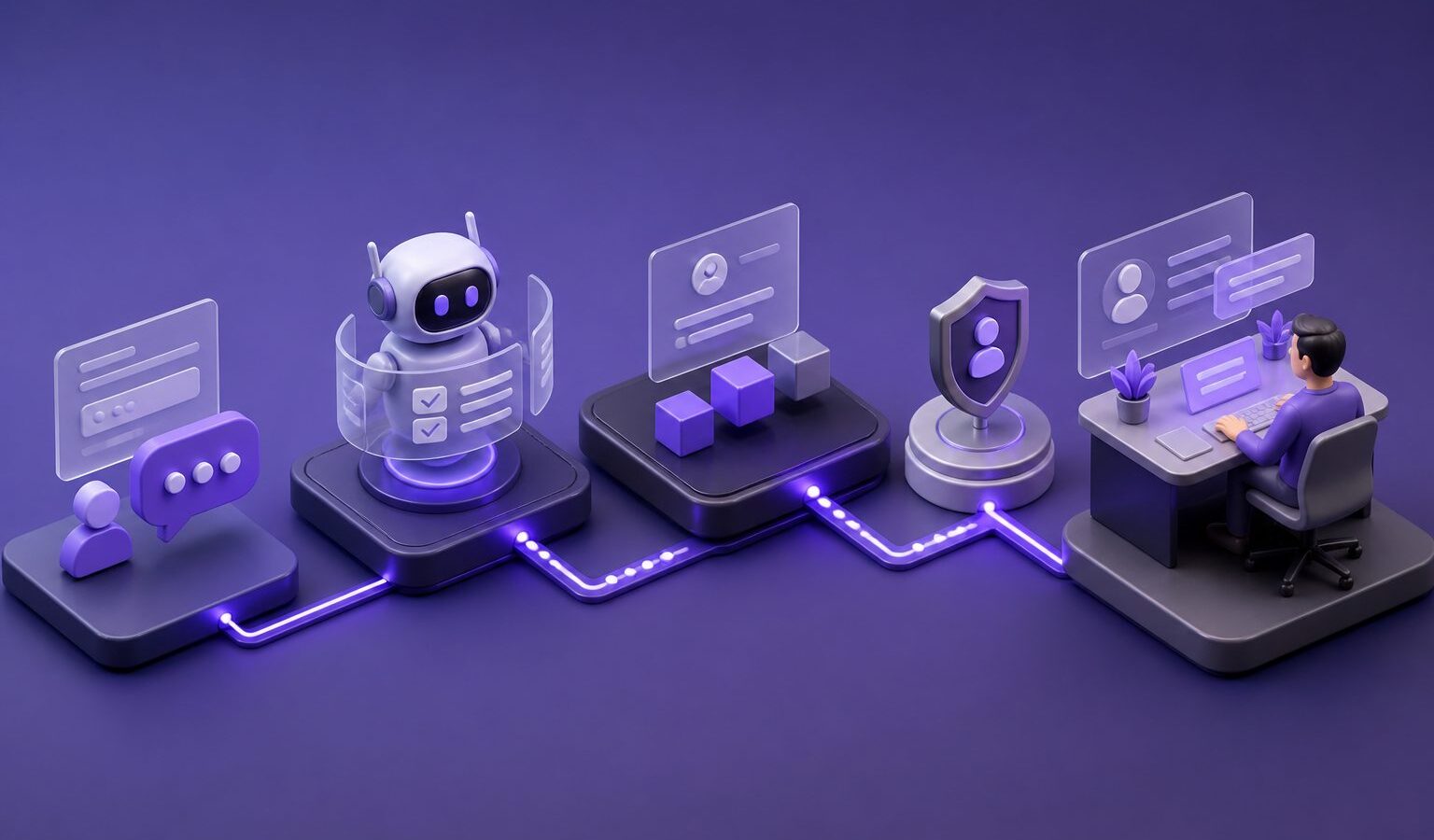
An AI sales agent with human takeover is a hybrid sales workflow: software handles the first reply, qualification, and routine follow-up, then passes the lead to a person when intent, risk, or deal value crosses a threshold you set in advance. For SaaS buyers, that threshold is the part worth shopping for. A tool that doubles your message volume and then drops the lead on a rep with three lines of context has just moved the busywork somewhere else.
If you are still building a shortlist: our AI sales agents comparison guide covers the field, the best AI sales agents in 2026 narrows it to the tools worth a demo slot, and the highest-ROI AI sales agents framework sets out where the spend actually pays back.
What an AI sales agent with human takeover actually is
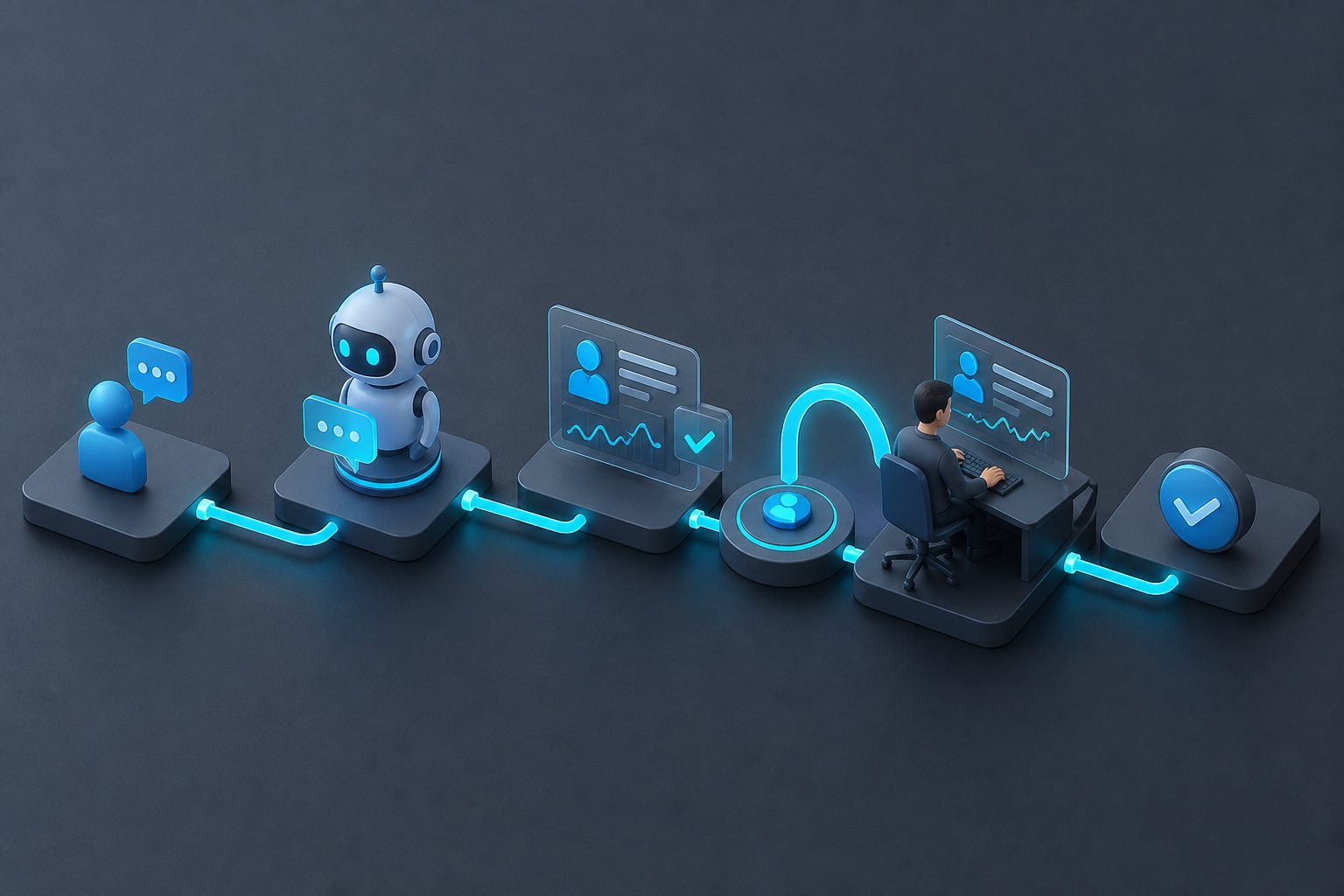
An AI sales agent with human takeover is a sales system where AI owns the repetitive front end and a person can step in, with full context, before the conversation becomes expensive to get wrong. The handoff is scheduled behavior. You design it, trigger it, and measure it like any other step in the funnel.
The split is simple. AI owns speed, consistency, and early qualification. People own judgment, trust, and everything that does not fit the script. Most vendors have converged on roughly this shape: let the software absorb the volume-heavy part of prospecting, then route the prospect to a person once the signal justifies a real conversation.
Why SaaS teams end up with the hybrid model
Full autonomy is rarely what buyers are after. What they want is a system that answers in seconds, sorts leads the same way every time, and stops cleanly when the moment turns human. In SaaS that last part carries most of the weight: pricing, security review, procurement, and a buying committee of five people mean one careless message can cost the deal.
None of that removes work from the sales team. It changes which work. Someone still has to coach the model, read what it sends, own the customer experience, and step in when trust is on the line. Takeover is the control layer that makes the rest of the automation safe to leave running.
Human takeover vs human-in-the-loop
The two phrases get used interchangeably in demos. They solve different problems.
| Model | Who handles the first action | When a human enters | Best use case |
|---|---|---|---|
| AI-only | AI | Rarely or never | Simple, low-risk interactions |
| Human-in-the-loop | Human approves before action | Before a message is sent or a promise is made | Pricing, legal, compliance, outbound review |
| Human takeover | AI starts, human takes over midstream | After a trigger or threshold is reached | Inbound qualification, lead routing, complex deals |
The distinction matters because some vendors label any review step “human takeover.” Ask what the person actually receives. A Slack ping saying “lead 4471 needs attention” is a notification. A takeover hands over the conversation state, the lead context, and a recommended next move.
A five-gate takeover model for SaaS buyers
Split the handoff rules into five gates and keep them separate. One blended “lead score” hides which condition actually fired, so when a rep asks why a lead landed on their desk, nobody can answer.
1) Fit gate
Does the account belong in your ICP at all? Industry, headcount, the contact’s role, region, product line. Weak fit means the software keeps nurturing or suppresses the record instead of handing a rep a conversation they will regret taking.
2) Intent gate
Is the prospect showing intent you can point to? A demo request, three visits to the pricing page in one week, a reply that names a competitor or a deadline. Opens and clicks do not clear this gate. Takeover should fire on intent someone can observe, never on an inference nobody can inspect.
3) Risk gate
Does the exchange touch pricing, legal terms, consent, security questionnaires, regulated language, or anything else where the software might make a promise you then have to honor? Hard-code this gate. A confidence score is the wrong instrument for it.
4) Value gate
Some accounts earn a person early because the upside is too big to leave running unattended. Enterprise logos, expansion inside an existing account, deals with four stakeholders on the thread. The AI could probably keep the conversation going. That is beside the point.
5) Exception gate
Complaints, opt-outs, contradictions, and anything that reads like “just put me through to a person.” A system that handles this gate well is telling you it knows where its limits are.

What the human should receive at takeover time
A takeover only works if the rep can act on it within the next few minutes. Most handoffs fail on missing context rather than on bad AI copy — the message reads fine, the rep just has no idea what happened before it.
The packet should carry:
- Who the lead is and why they match your ICP
- What signal triggered the takeover
- A short conversation summary
- The exact messages or questions that matter
- Any promises already made
- What is still unknown
- Risk or compliance notes
- The recommended next step
- Who owns the record now
Think of it as a packet of evidence rather than a score: what we know, what we ruled out, what happens next. If the rep’s first message has to ask the prospect to repeat what they already told the software, most of the value is gone before the conversation restarts.
How to measure whether takeover is working
Handoff count is the easiest number to move and the least useful one. A system can flood the queue and still leave the team worse off. Measure the quality of the transfer instead.
The core metrics
- Accepted handoff rate: how often sellers accept the lead without sending it back
- Time to first human response: how fast a person actually picks up
- Correction rate: how often the rep has to rewrite, clarify, or undo the AI’s message
- Meeting rate after takeover: whether takeover improves conversion, not just routing
- Escalation recovery rate: how often a human rescue turns a weak interaction into a real opportunity
- Promise mismatch rate: how often the AI overstates or misstates something
What good looks like
Rework goes down. Reps spend the week on discovery calls instead of rewriting messages the software already sent. And failed handoffs surface somewhere a person will see them, instead of being averaged away in a dashboard.
How to choose a vendor for this use case
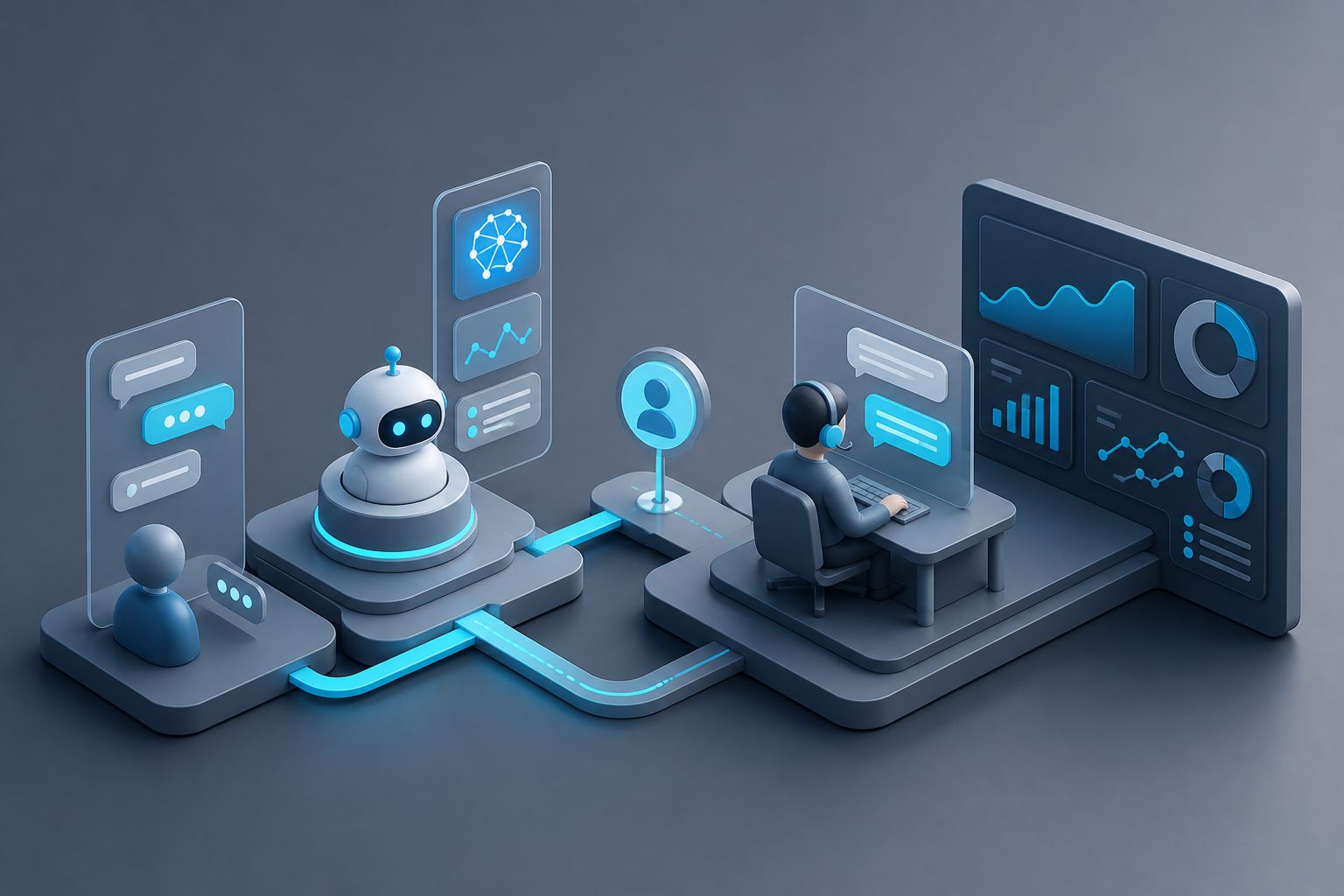
Ask to see the workflow running, on their data if not yet on yours. Marketing pages all describe the same product.
Questions to bring to the demo
-
What exactly triggers takeover?
- Look for hard rules, soft signals, and a stated fallback for when confidence is low.
-
Does the human get full context or just an alert?
- Ask them to open the actual handoff view and show you conversation history, lead data, and next action.
-
Can sales accept, reject, or return a handoff?
- That feedback loop is the only way the trigger logic improves.
-
Are permissions, consent, and suppression rules enforced before action?
- This matters far more than another layer of “AI personalization.”
-
Can the system explain why a lead was handed off?
- You need an audit trail you can still read six months later.
-
Can you measure downstream performance by segment?
- Inbound, outbound, expansion, and long-tail motions should be comparable separately.
-
Does the product fit your motion, or does it force a generic workflow?
- Compare vendors by operating model, not by feature count.
Work out which category a vendor sits in before you book the call: qualification, routing, outbound, or full-funnel coverage. Our AI sales agents comparison guide and the rundown of the best AI sales agents in 2026 sort the field along those lines.
Common mistakes buyers should avoid
1) Treating takeover as an afterthought
If the product only handles the AI half well, your sales team becomes the cleanup crew.
2) Using one score for everything
Fit, intent, risk, and value are different signals. Collapsing them into a single number early means you can never explain a routing decision afterwards.
3) Handoffs without ownership transfer
If nobody’s name is on the record after the transfer, the lead just sits there.
4) Over-automating sensitive conversations
Pricing, legal, compliance, and enterprise procurement should not be left to a generic prompt.
5) Measuring only lead volume
A high handoff count hides poor meeting quality and weak downstream conversion just as easily as it demonstrates coverage.
When this model makes the most sense
An AI sales agent with human takeover earns its keep where the buyer journey mixes repetition with judgment. SaaS is full of those: inbound demo requests, lead qualification, renewal support, expansion routing, and the long tail of accounts nobody has time to call. Software takes the first pass, a person takes the decisive step.
It works less well in a fully transactional motion, or in a team that cannot reassign ownership the same day. When this model fails, the cause is usually organizational rather than technical: the handoff arrives correctly and then sits in a queue for two days.
Frequently asked questions
Is an AI sales agent with human takeover the same as a chatbot?
No. A chatbot answers questions. An AI sales agent qualifies, routes, and prepares the record so a rep can pick it up mid-conversation. Takeover is what makes it a sales workflow rather than a support widget.
When should a human take over?
When the lead matches your ICP and shows observable intent, or when the conversation touches risk, an exception, or an opportunity large enough to justify the rep’s time.
What is the biggest reason takeover fails?
Missing context. If the rep cannot see why the handoff happened, they lose time re-asking questions the prospect already answered, and the prospect notices.
Should every lead be handed to a human?
No. Low-fit and low-intent leads usually do better with AI nurturing, suppression, or delayed routing.
How do I evaluate this as a SaaS buyer?
Ask for four things: the trigger logic, the handoff packet, the acceptance loop, and the reporting view. Then compare that workflow against the rest of your sales stack.
Keep reading

SaaS Vendor Source Code Escrow Clause: Buyer Negotiation Guide
A SaaS vendor source code escrow clause should cover code, cloud deployment, data export, testing, and release triggers. Use this buyer checklist to negotiate continuity protection.

SaaS Contract Breach Cure Period Standard: Buyer Benchmarks and Clause Terms
Learn the SaaS contract breach cure period standard, including 5-, 10-, 15-, and 30-day benchmarks, carve-outs, notice rules, and buyer protections.

SaaS grandfathered pricing policy review: A buyer’s renewal checklist
SaaS grandfathered pricing policy review for buyers: identify hidden repricing triggers, test renewal language, and negotiate defensible price protection.